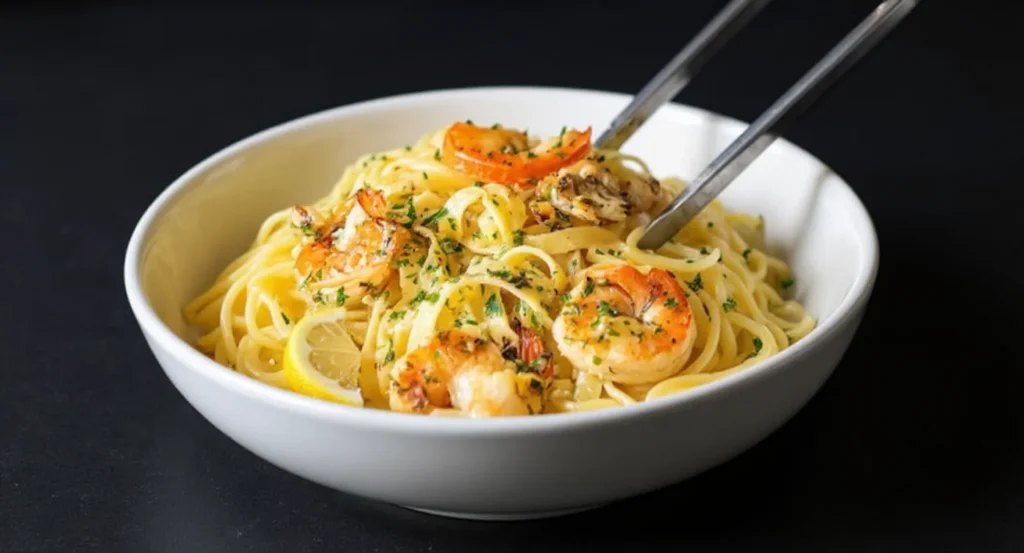
Remember the first time you made garlic cream pasta at home? The kitchen smelled amazing, and you felt proud and hungry. We want you to feel that way too. Whether it’s for a weeknight dinner or a special date, we’ll guide you through it!
We aim for a creamy garlic sauce that wraps around perfectly cooked pasta and tender seafood. You’ll need garlic, cream, butter, olive oil, and Parmesan. Add fresh or frozen shrimp, scallops, mussels, or clams. A bit of white wine and lemon juice make it pop.
This guide is for all home cooks. We’ll cover ingredients, tools, prep, and step-by-step cooking. You’ll learn how to avoid overcooked seafood and fix a broken sauce. Expect clear, friendly instructions and simple techniques that make a big difference.
Key Takeaways
- We’re aiming for a silky garlic cream sauce with seafood that’s never rubbery.
- Simple pantry ingredients plus white wine and lemon create big, bright flavor.
- Recipe works for weeknights, date nights, or entertaining — and it’s easy to customize.
- We include step-by-step instructions, troubleshooting, and plating tips.
- Tools and prep matter: good knives, a roomy pan, and reserved pasta water are game-changers.
Why This Creamy Garlic Seafood Pasta Recipe Works Every Time
This dish is a hit because it combines flavors, textures, and simple steps in a tasty way. Small decisions, like how long to cook garlic or what pasta to use, make a big impact. Follow a simple plan, and you’ll feel like you’re dining at a restaurant every night!
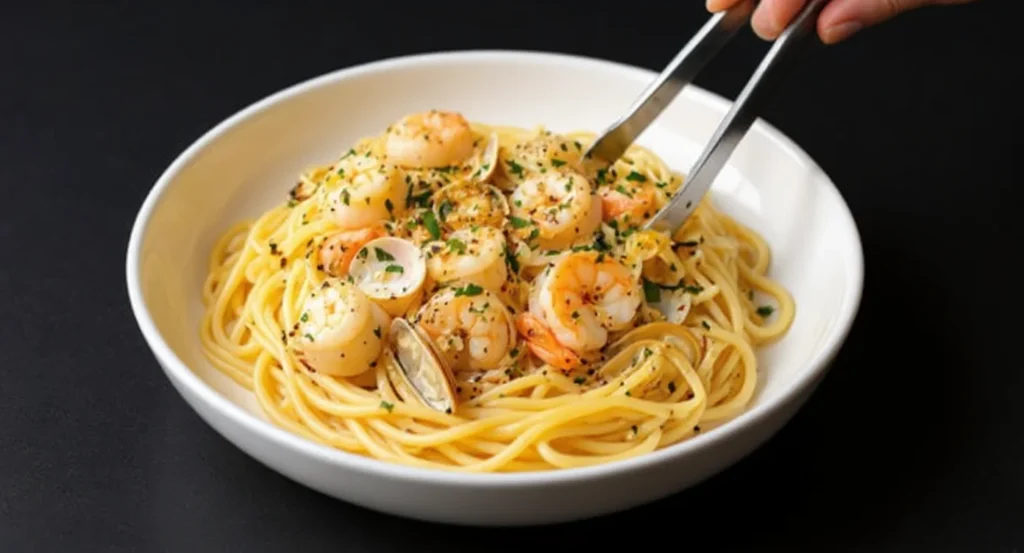
Flavor balance between garlic, cream, and seafood
Garlic adds a savory kick that sets the dish off right. Cream and butter make it silky smooth, spreading flavors with every bite.
Parmesan brings umami and saltiness. Lemon adds brightness and cuts the richness. White wine adds acidity and depth. Shrimp and scallops need light seasoning and quick cooking to keep their taste fresh.
Choosing the right pasta shape for sauce clinging
Linguine and spaghetti are great with thin sauces. Their long strands wrap the seafood and sauce in every bite.
Fettuccine holds more cream for a richer taste. Tube or ridged pasta works well with chunkier seafood or tomatoes. The pasta’s texture and surface area help the sauce cling better.
And if you ever want to take things up a notch for a special date night, try making it with sweet lobster meat like in our easy lobster pasta recipe: — it’s a decadent twist that pairs perfectly with creamy garlic sauce.
How simple techniques elevate a restaurant-quality dish
- Sweat garlic gently so it flavors without becoming bitter.
- Deglaze the pan with white wine to lift the browned bits and add acidity.
- Reduce liquids to concentrate flavor before adding cream.
- Finish the sauce with cold butter and reserved pasta water to create a glossy emulsion.
- Add seafood near the end so it stays tender, not rubbery.
We keep everything ready and time the pasta and seafood perfectly. These small steps lead to consistent results, making every dinner a success.
Essential Ingredients for Creamy Garlic Seafood Pasta
We’ll explore the key ingredients for creamy garlic seafood pasta. Choose fresh proteins and pantry staples that complement each other. Taste and adjust as you go for a top-notch finish!
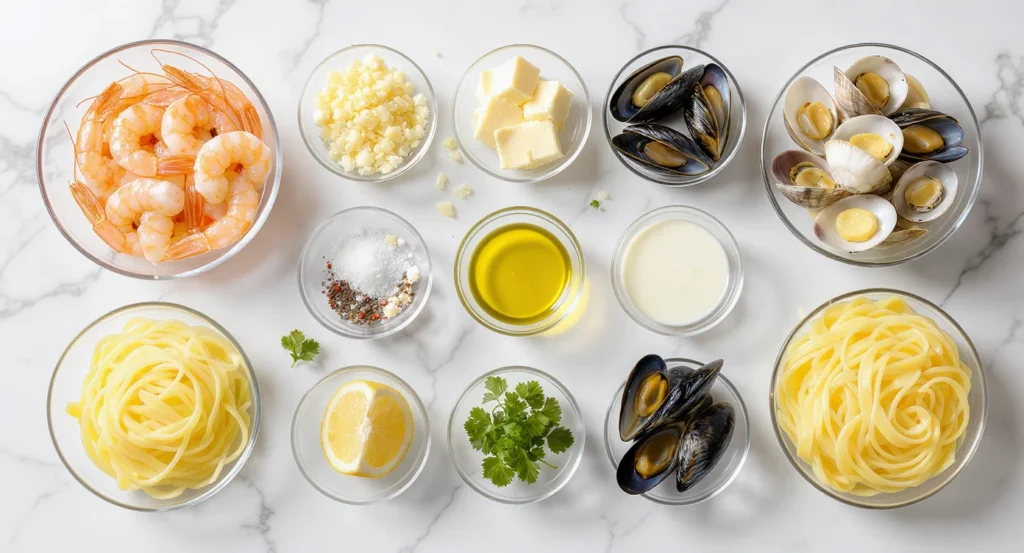
Seafood selection: shrimp, scallops, mussels, clams, and alternatives
Go for large shrimp (16/20), peeled and deveined, for quick cooking. Pat dry sea scallops for a great sear. Make sure mussels or clams are live or very fresh, scrubbing shells and debearding mussels before cooking.
If you’re craving more shrimp inspiration, check out our copycat Olive Garden shrimp scampi— it’s bright, garlicky, and a great example of how well shrimp and pasta play together.
Need substitutes? Canned lump crab, imitation crab, lobster tails, or firm white fish like cod or halibut are good options. Choose from reputable suppliers and check NOAA guides for sustainable seafood.
Pantry essentials: pasta, garlic, cream, butter, olive oil
Opt for linguine, fettuccine, or spaghetti for the sauce to cling to. Use fresh garlic for a bright taste. Heavy cream makes the sauce rich; half-and-half is lighter.
Use unsalted butter and a neutral oil for a stable base. Finish with extra virgin olive oil. Have kosher salt, freshly ground black pepper, and red pepper flakes ready for seasoning.
Flavor boosters: white wine, lemon, Parmesan, fresh herbs
Use a dry white wine like Sauvignon Blanc or Pinot Grigio for depth. Add fresh lemon juice and zest to brighten the cream.
Grated Parmesan or Grana Padano adds umami and thickens the sauce. Finish with chopped parsley or basil for a fresh touch. For more depth, try a bit of anchovy paste or fish sauce. Cream cheese can make it silky.
- Always taste and adjust seasoning as you cook.
- Buy the freshest seafood you can find for the best results.
- Keep simple swaps ready so the dish fits your pantry.
Best Tools and Cookware for an Easy Seafood Pasta Recipe
Make your kitchen a place of confidence and comfort with creamy garlic seafood pasta. Choose a few essential tools for better results with less hassle. You don’t need every gadget. Just pick the smart ones that help with searing seafood, draining pasta, and blending sauces.
- Opt for a wide, heavy-bottomed skillet or a shallow sauté pan (10–12 inches) for weeknight meals. Its broad surface helps moisture evaporate quickly, ensuring shrimp and scallops sear, not steam.
- For larger groups, a deeper sauté pan is better. It holds more sauce and makes tossing pasta with seafood easier.
- Investing in a heavy-bottom pan is worth it. It ensures even heat distribution, preventing hot spots that can burn butter or cream.
Good knives, colander, tongs, and measuring tools
- A sharp chef’s knife is key for chopping garlic, herbs, and shallots. A small paring knife is ideal for deveining shrimp cleanly.
- A sturdy cutting board with a non-slip base keeps prep safe. Always use the proper knife grip to protect your fingers.
- A fine-mesh colander is great for draining pasta and rinsing mussels without losing small pieces.
- Tongs make tossing pasta into sauce and lifting seafood easy without breaking it. A wooden spoon or silicone spatula gently stirs the cream.
- Measuring cups and spoons are crucial for maintaining flavor balance, especially with cream, wine, and lemon juice.
Optional gadgets: pasta pot with insert, thermometer
- A pasta pot with an insert saves time when draining and keeps pasta warm while you finish the sauce.
- An instant-read thermometer ensures perfect doneness: aim for shrimp at 125–135°F and scallops at 120–130°F for tender results.
- A microplane makes bright lemon zest and finely grated Parmesan effortless.
- Remember, quality knives and a heavy-bottom pan are more important than fancy tools. With these basics, you’ll cook like a pro without a huge gadget collection.
Preparing Seafood Properly for a Fresh-Tasting Seafood Pasta Dish
We want your pasta to shine with bright, clean seafood flavors. Proper prep keeps texture snappy and keeps grit or off-odors out of the pan. Follow these hands-on steps before you start the sauce so every bite tastes restaurant-level.
How to clean and devein shrimp and prep scallops
Peel shrimp by removing the shell but keep tails on for presentation if you like. Run a paring knife along the back and lift out the dark vein with the tip of the knife. Pat shrimp very dry on paper towels so they sear instead of steam.
For scallops, check for the small side muscle and pull it off if present. Pat scallops dry right before seasoning to avoid extra moisture. Light salt and pepper just before cooking gives the best crust.
Tips for inspecting and prepping mussels and clams
Inspect shells and toss any that are cracked or remain open when tapped. Scrub mussels and clams under cold running water with a stiff brush. Remove the mussel beard by pulling it toward the hinge with a firm tug.
Purge clams of sand by soaking them 20–30 minutes in salted water, then rinse. Store live shellfish on ice in the fridge, covered with a damp towel, and use within 24 hours for peak flavor.
And if you’ve got leftover lobster or feel like mixing things up, you might love our warm buttery lobster rolls — it’s another seafood classic with rich, indulgent flavor.
Storing and thawing frozen seafood safely
- Thaw overnight in the refrigerator for best texture.
- For quick thawing, place sealed bags under cold running water until flexible.
- Never refreeze seafood once it has fully thawed.
Keep seafood below 40°F at all times. Discard any with an off-odor. Cook mussels and clams until their shells open fully and throw away any that stay closed. Proper handling gives us confidence and makes a huge flavor difference!
Step-by-Step Method for Making Garlic Cream Sauce Pasta
We guide you through making a glossy garlic cream sauce that sticks to pasta. Follow each step carefully, and keep your ingredients ready. Small actions lead to big flavors!
Begin by heating oil and butter over medium heat. Add minced garlic and finely chopped shallot. Cook for 1–2 minutes until they’re soft and fragrant. This low heat helps keep the garlic sweet and avoids bitterness.
Add a pinch of red pepper flakes for some heat. Stir gently. You want the aromatics to be translucent, not browned.
Pour in dry white wine like Sauvignon Blanc to deglaze the pan. Use a wooden spoon to scrape up any caramelized bits. Let the wine reduce by half, which takes 2–4 minutes, to concentrate the flavors.
If you don’t have wine, use low-sodium chicken broth instead. The goal is to have a flavorful, slightly reduced liquid to base the sauce on.
Lower the heat to low. Add heavy cream or half-and-half and let it simmer gently. Stir occasionally until it thickens a bit. Keep the simmer soft to prevent the cream from breaking.
Grate in Parmesan and stir until it melts. Remove the pan from the heat and add cold butter in small pieces. Whisk or stir until the sauce is silky and glossy.
Season with salt, black pepper, and a squeeze of lemon to balance the richness. If the sauce is too thick, add pasta water by the tablespoon until it’s just right.
If the sauce separates, whisk in a tablespoon of pasta water or extra cream to mix it back. Taste and adjust the seasonings before tossing with pasta and seafood.
Cooking Pasta Perfectly for a Creamy Seafood Pasta Recipe
We want your pasta to carry the sauce and the seafood without turning gummy. Start with a large pot of water, plenty of salt, and the right shape for the sauce. Small choices at this stage make a big difference to texture and flavor.
Pick linguine or spaghetti for the classic seafood feel. Use fettuccine if you want extra cream clinging to each bite. Thicker ribbons hold more sauce and need a bit more cooking time than thin strands. Check package times as a guide and plan your sauce timing around them.
Al dente timing and why it matters
Al dente means the pasta still has a slight resistance when you bite it. Cook it until it is almost done, then stop one to two minutes early. The pasta finishes cooking while you toss it with the sauce, so it absorbs flavor without getting soft.
Test by tasting a strand near the end of the timer. If there is a tiny bite in the center, you’re there. This keeps texture firm and prevents a mushy result when you add seafood and cream.
Reserving pasta water to adjust sauce consistency
Before you drain, save one to two cups of the starchy cooking water. That liquid acts like glue, helping the cream and butter cling to noodles by emulsifying the sauce.
- Add small amounts — one to two tablespoons at a time — while you toss the pasta with sauce. Need help figuring out how much salt is both delicious and healthy? Mayo Clinic’s guide to reducing sodium without losing flavor has smart, doable tips.
- Use the water to loosen a thick sauce or to thicken a runny one by reducing a little on the heat while stirring.
- Salt the pasta water well. Aim for about 1 to 1.5 tablespoons kosher salt for every 4 to 6 quarts of water so the pasta is properly seasoned.
We recommend timing your sauce finish to match the pasta’s last minute. Toss everything together in the pan with reserved water and a pat of butter or a sprinkle of Parmesan to get a glossy, silky finish. Enjoy the saucy shine on every forkful!
Creamy Garlic Seafood Pasta
We carefully mix seafood and sauce to keep shrimp tender and scallops juicy. We cook each protein separately and watch the time closely. This way, the texture stays bright and the sauce smooth.
Bringing seafood and sauce together without overcooking
We quickly sear shrimp and scallops, then set them aside. We steam mussels and clams until they open. We then discard any that don’t open and save their juices for flavor.
We add pasta to the pan with the sauce, tossing in some pasta water. Then, we add the seafood back for 30–60 seconds. This warms the seafood without overcooking it.
Finishing touches: lemon, herbs, and extra Parmesan
A squeeze of lemon juice and a bit of zest brighten the dish. Chopped parsley or basil add color and freshness.
Grate more Parmesan on top and drizzle with olive oil or browned butter for richness. Add black pepper or lemon pepper for extra flavor.
Plating tips for an impressive seafood pasta presentation
- Warm shallow bowls before serving to keep the pasta hot.
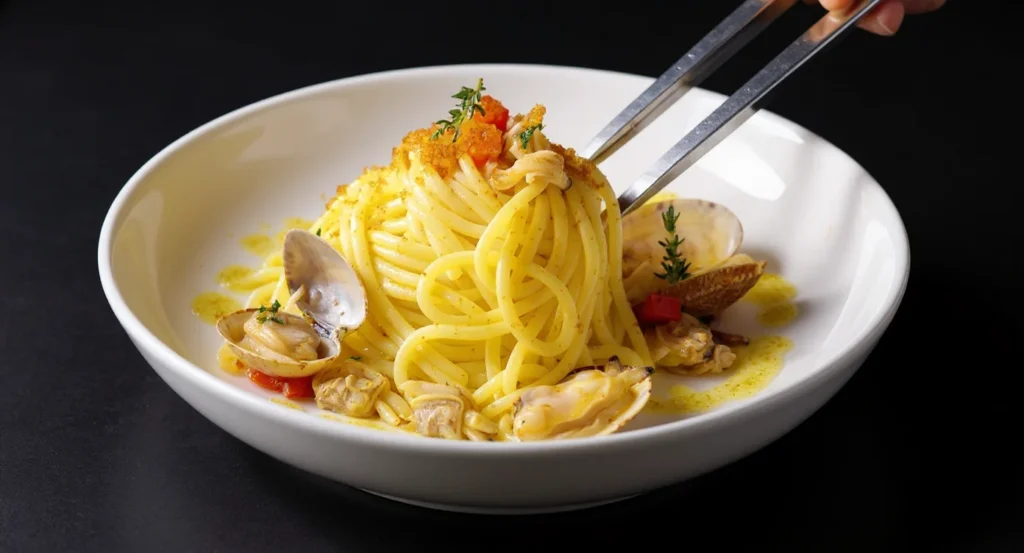
- Use tongs to twist portions into neat nests in the center of the plate.
- Arrange larger pieces of seafood on top so they stand out visually.
- Garnish with herb sprigs and a lemon wedge for contrast.
- For a rustic family feel, serve family-style in a shallow baking dish and let everyone help themselves.
This extra care at the end makes a big difference. Your guests will love it and ask for more!
Variations and Substitutions for the Best Seafood Pasta Recipe
We love making this garlic cream pasta our own. Small swaps change calories, allergens, or flavor without losing the rich, savory base. Pick one change at a time so the dish stays balanced and familiar.
Make it lighter with simple dairy swaps
Use whole milk or half-and-half and stir in a tablespoon of cornstarch or a flour slurry to thicken the sauce. Cut the cream amount by half and boost body with grated Parmesan for a silky finish. Roast the garlic before adding it to the pan for a sweeter, mellower flavor while trimming fat.
Gluten-free, dairy-free, and low-fat options
- Gluten-free pasta made from brown rice, chickpea, or corn works well. Watch cooking times and test for al dente texture.
- For dairy-free, try full-fat coconut milk or a cashew cream blended smooth. Add nutritional yeast for savory depth and use plant-based butter and vegan Parmesan.
- To lower fat, skip butter and use a splash of extra-virgin olive oil plus extra lemon juice to brighten the sauce.
Protein swaps to match the occasion
Lump crab meat folded in at the end gives a delicate sweetness and keeps the seafood texture intact. For a luxe version, sear or poach lobster tail and add pieces near the finish so they stay tender. Make a shrimp-only bowl by increasing the shrimp amount and add crunch with toasted breadcrumbs or color with sautéed cherry tomatoes.
We encourage experimentation while keeping the garlic-cream backbone. Small changes help you tailor the recipe for diets, guests, and pantry staples without losing the dish’s soul. Enjoy creating your perfect plate!
Serving Suggestions and Pairings for Garlic Shrimp Pasta
We want your garlic shrimp pasta to be the star of the show. A few smart pairings can elevate the dish. These ideas will help you serve a meal that everyone will remember!
Wine picks that refresh the palate
- Sauvignon Blanc — bright acidity cuts through the cream and matches lemon notes.
- Pinot Grigio — light, crisp, and neutral so the seafood keeps center stage.
- Vermentino — herbal lift and citrus tones that pair well with parsley and garlic.
- Light oaked Chardonnay — choose this when you want a creamier match with buttered flavors.
- Rosé or Prosecco — for a casual crowd-pleaser that feels festive and refreshing.
To explore more wine and seafood pairings, Wine Enthusiast’s expert guide covers everything from crisp whites to sparkling pairings.
For a thoughtful look at alcohol and health, CDC’s alcohol and dietary guidelines share balanced insights and safety considerations.
Smart side dishes to balance texture and color
Keep sides simple and complementary. Crunch and acid are your friends.
- Garlic bread or warmed ciabatta — use store-bought loaves topped with garlic butter and parsley to soak up the sauce.
- Bright green salad — try arugula with lemon vinaigrette and shaved Parmesan for peppery contrast.
- Roasted vegetables — asparagus or broccolini tossed with olive oil, salt, and a squeeze of lemon add color and bite.
- Quick tomato roast — cherry tomatoes roasted for 10–12 minutes bring sweetness and acidity to the plate.
Light desserts to finish the meal
End with citrus or something with cool texture to cleanse the palate.
- Lemon sorbet — icy and bright for a clean finish.
- Panna cotta with berry compote — silky, slightly sweet, and easy to portion for guests.
- Lemon tart — buttery crust with tart curd for a classic match.
- Tiramisu or affogato — pick one of these when you want a richer, coffee-forward ending.
We suggest pairing one wine, one side, and one dessert for a cohesive menu. Small choices make a big difference and keep the meal balanced and fun!
Tips to Turn This Easy Seafood Pasta Recipe into Seafood Comfort Food
We love making a quick garlic seafood pasta into a cozy meal everyone wants again. A few tweaks in prep, timing, and seasoning make the sauce smooth and the seafood tender. Here are tips for planning leftovers, feeding a crowd, or making it kid-friendly. Enjoy the process and make it your own!
Make-ahead and reheating tips for leftover creamy pasta
Prep parts separately to keep texture fresh. Cook pasta a bit under al dente, then drain and cool it with olive oil.
Make the garlic cream sauce and cook seafood in separate containers. Store them in airtight containers in the fridge for up to 2 days.
- Reheat gently on low heat on the stove. Add reserved pasta water or a splash of cream to keep it silky.
- Reheat seafood briefly to avoid toughness. Fold it into the warmed sauce at the end.
- For freezer storage, freeze the sauce without cooked pasta. Thaw slowly in the fridge before reheating.
Scaling the recipe for dinner parties and family meals
Multiply ingredients when serving more people. Use larger pans or cook in batches to avoid overcrowding.
Time the pasta and sauce so they finish together for best texture. Keep a pot of reserved pasta water on hand to adjust sauce consistency.
- Serve family-style in a large warmed bowl for easy sharing.
- Offer a simple buffet with garlic bread and a green salad to streamline plating.
- If time is tight, cook seafood in batches and hold briefly on low heat under a tent of foil to keep warm.
How to make it kid-friendly and less spicy
Reduce or omit red pepper flakes and use gentle seasonings like lemon zest and parsley. Cut shrimp and scallops into bite-size pieces for easy eating.
Add familiar mix-ins to win picky eaters: peas, blanched broccoli florets, or halved cherry tomatoes work great.
- Offer plain pasta on the side and let kids add sauce or seafood themselves.
- Encourage involvement—kids can grate Parmesan or sprinkle parsley. It makes them more likely to try new flavors!
Conclusion
We can make a creamy garlic seafood pasta that tastes like a restaurant dish at home. Just use quality ingredients, basic tools, and simple techniques. Drying shrimp and scallops, sweating garlic gently, and using reserved pasta water are key steps.
These steps make a big difference in flavor and comfort. The result is a meal anyone can cook. It’s flavorful and adaptable.
Try the recipe and play with variations. Swap in cod or crab, use half-and-half or a lighter milk, or choose a gluten-free pasta. Remember, don’t overcrowd the pan and watch seafood closely to avoid overcooking.
Taste as you go to balance lemon, salt, and Parmesan. This will help you get the flavors just right.
Let’s cook along and make this dish our own! Share your photos and tweaks so we can celebrate new takes together. Once you master these steps, this creamy garlic seafood pasta will be a go-to, crowd-pleasing weeknight or dinner-party favorite.
Creamy Garlic Seafood Pasta Recipe
Short Description
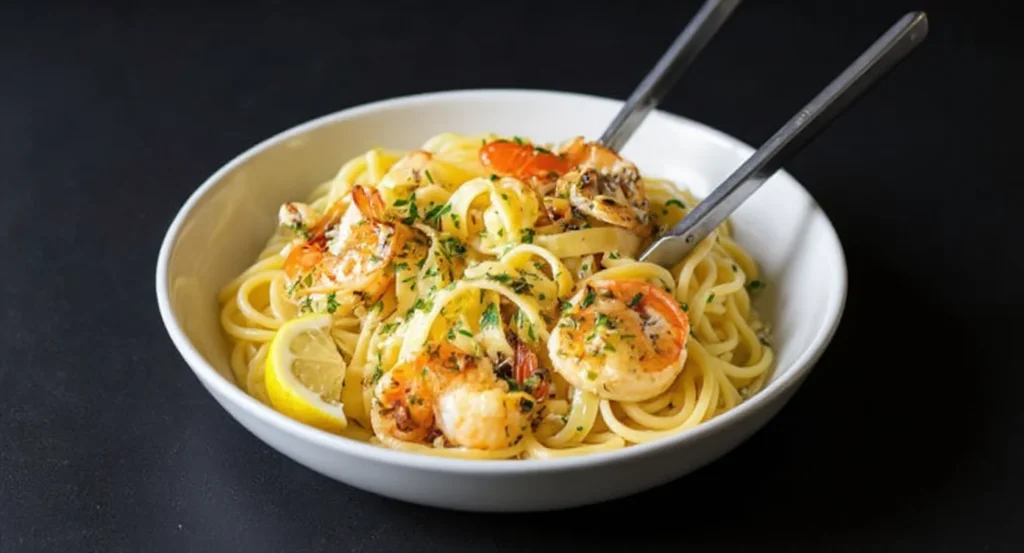
Indulge in a rich and silky garlic cream sauce wrapped around perfectly cooked pasta and tender seafood — shrimp, scallops, mussels, and clams. This easy seafood pasta is perfect for weeknight dinners, date nights, or special occasions.
Recipe Details
- Serving Size: 1 generous bowl
- Prep Time: 15 minutes
- Cook Time: 20 minutes
- Total Time: 35 minutes
Ingredients per Serving
- 80 g (about 3 oz) linguine or spaghetti
- 2 large shrimp, peeled and deveined
- 2 sea scallops, side muscle removed
- 2 fresh mussels, cleaned and debearded
- 2 fresh clams, scrubbed
- 1 tbsp unsalted butter
- 1 tsp olive oil
- 1 clove garlic, minced
- 1 tbsp finely chopped shallot
- 30 ml (2 tbsp) dry white wine or broth
- 60 ml (1/4 cup) heavy cream
- 15 g (2 tbsp) grated Parmesan cheese
- 1 tsp fresh lemon juice
- Salt and pepper to taste
- Fresh parsley for garnish
- 1/4 cup reserved pasta cooking water
Nutritional Facts (per serving, approx.)
- Calories: 420 kcal
- Protein: 25 g
- Carbohydrates: 45 g
- Fats: 15 g
- Fiber: 3 g
- Sodium: 780 mg
- Sugar: 3 g
Instructions
Step 1 – Prep the Seafood
Clean and prep shrimp, scallops, mussels, and clams. Pat shrimp and scallops dry. Scrub shellfish and remove mussel beards. Discard any with cracked shells or those that don’t close when tapped.
Step 2 – Cook the Pasta
Bring a large pot of salted water to a boil. Cook pasta until just shy of al dente according to package directions. Reserve 1/4 cup pasta cooking water, then drain.
Step 3 – Start the Creamy Garlic Sauce
In a large skillet, heat butter and olive oil over medium heat. Add minced garlic and chopped shallot. Cook gently for 1–2 minutes until fragrant and tender, without browning.
Step 4 – Deglaze and Reduce
Pour in white wine (or broth) to deglaze. Scrape up any flavorful browned bits. Let it reduce by half for 2–3 minutes.
Step 5 – Add Cream and Cheese
Lower the heat. Add heavy cream and simmer softly until slightly thickened. Stir in Parmesan until melted and smooth.
Step 6 – Cook the Seafood
In a separate skillet, sear the shrimp and scallops for 1–2 minutes per side until just cooked. Steam mussels and clams until shells open, then discard any unopened ones.
Step 7 – Combine and Finish
Add cooked pasta to the sauce along with a splash of pasta water. Toss well, then add seafood just to warm through (30–60 seconds). Squeeze lemon juice over the top, taste, and adjust seasoning.
Step 8 – Serve
Twist pasta into warm bowls, arrange seafood on top, and garnish with chopped parsley. Serve with extra Parmesan, lemon wedges, or a drizzle of olive oil for richness.