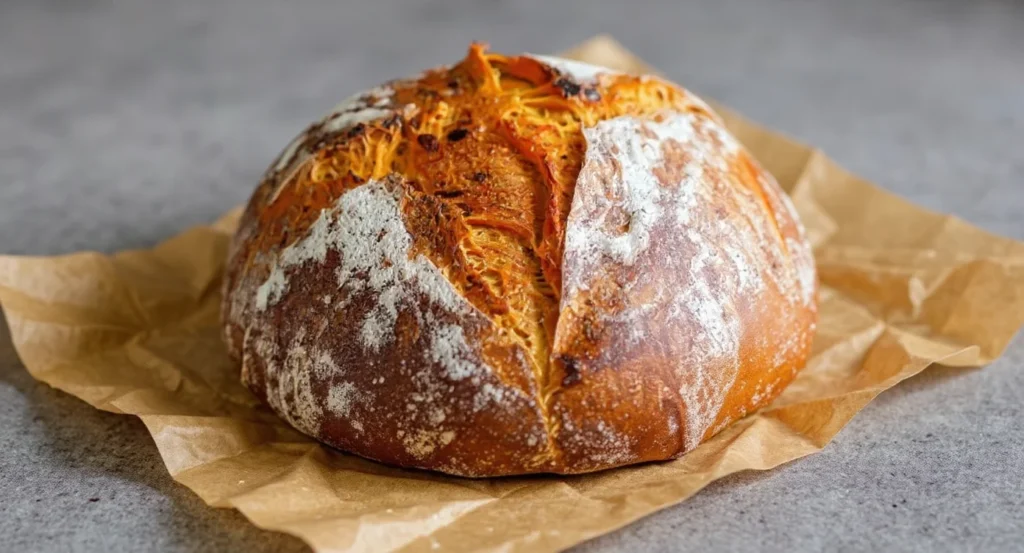
The first time we took a warm, pumpkin sourdough loaf out of the oven was unforgettable. The kitchen filled with the scent of cinnamon and home. The bread’s crumb was so soft, it felt like a hug in your hands.
If you love baking with pumpkin during the fall, be sure to try our cozy Pumpkin Chocolate Chip Bread—it’s packed with melty chocolate and perfect for chilly mornings!
This guide will help you make a fluffy, autumnal Pumpkin Sourdough Bread. It combines pumpkin puree with an active sourdough starter for a natural lift. It’s perfect for home cooks in the United States who want a recipe they can customize. Curious about all the ways sourdough bread can support your health? The Mayo Clinic’s feature on sourdough bread breaks down its unique health benefits and why it’s different from regular loaves
For bakers looking to expand their sourdough skills, our Easy Sourdough Focaccia delivers incredible flavor and a delightfully crisp crust—give it a try next!
Follow our step-by-step guide to make this delicious bread. It takes a few hours of work, plus time for fermentation and resting overnight. You can make one big loaf or two smaller ones.
Pumpkin fans, don’t miss our crowd-pleasing Healthy Pumpkin Bars for a delicious, lighter treat that’s easy to take on the go.
We’ll teach you how to care for your starter, mix the dough, shape it, and bake it. You can use a Dutch oven or a baking stone. We’ll also share tips on how to keep your loaf fresh.
Key Takeaways
- This guide shows how pumpkin puree and active sourdough starter create a fluffy, flavorful loaf.
- Recipe fits home bakers of all skill levels and offers easy variations.
- Plan for hands-on mixing plus fermentation and an overnight rest for best flavor.
- Yields one 1–1.5 kg loaf or two smaller loaves; Dutch oven or baking stone both work.
- We cover starter prep, hydration balance, shaping, baking, and storage tips.
Why This Pumpkin Sourdough Bread Recipe Works Every Time
We aim for every loaf to be tender, flavorful, and consistent. This Pumpkin Sourdough Bread Recipe mixes pumpkin, water, starter, and spices for a reliable rise and soft crumb. We share practical tips and rules for home bakers.
Before baking, read these key points. We make steps easy and offer tips for your first try.
Balancing hydration and pumpkin puree for fluffiness
Pumpkin puree adds both water and solids. When calculating hydration, include its weight. Start with 70–75% total hydration, including pumpkin. For example, with 500 g flour, aim for 350–375 g total water plus puree.
If your puree is watery, add less water. If it’s thick, add more. The dough should feel soft and slightly tacky. Adjust in 5% steps for a second bake.
The role of active sourdough starter in lift and flavor
An active starter adds wild yeast and lactic acid bacteria. These power oven spring and tang. Feed the starter 4–8 hours before mixing for peak activity.
- Use a feeding ratio like 1:2:2 in warm kitchens.
- Use 1:3:3 if your kitchen is cool or the starter is slow.
- Look for domed, airy bubbles and a pleasant tang as signs of peak activity.
Stronger starter means better lift without overproofing. Adjust feeding times based on kitchen temperature and starter vigor.
How pumpkin spices enhance sourdough complexity
Spices interact with fermentation to boost sweetness and depth. Cinnamon, nutmeg, cloves, and ginger pair with sourdough acidity. This rounds flavor and adds warmth. Mix spices into the flour for even distribution.
- Use about 1 to 1.5 teaspoons cinnamon per 500 g flour.
- Add 1/4 to 1/2 teaspoon total of nutmeg, cloves, and ginger combined.
- For bolder spice, blend spices into the pumpkin slurry before adding liquids.
Spices do not stop fermentation. They shift how we taste acidity, making the loaf seem sweeter and richer without extra sugar.
Pumpkin Sourdough Bread Recipe
We love a recipe that’s easy to follow and bakes perfectly. Below, you’ll find the ingredients, tools, and timing options. This way, you can choose to bake it the same day or overnight. Let’s get started and have fun in the kitchen!
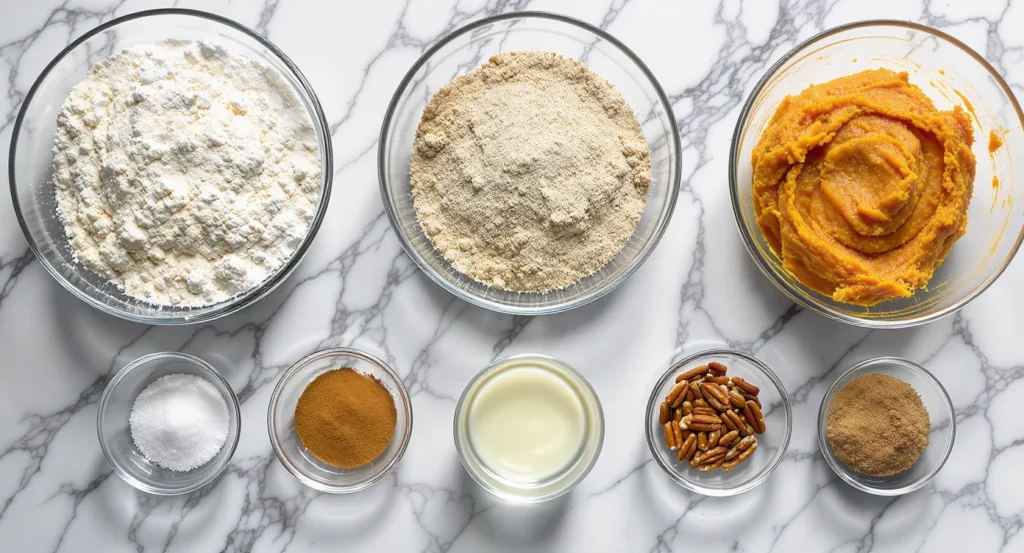
Ingredients list for the main loaf
Choose between baker’s-percent style for precision or volume for home cooks. We offer both to fit your schedule.
- Baker’s percentages (based on 100% flour):
- Strong bread flour: 100%
- Whole wheat flour (optional): 10–20%.
- Pumpkin puree (unsweetened): 20–30%
- Active sourdough starter (100% hydration): 20–25%
- Water: 60–75% (adjust to feel)
- Salt: 2%
- Maple syrup or brown sugar (optional): 2–4%
- Spices (blend): cinnamon 0.6%, nutmeg 0.1%, ginger 0.1%, cloves 0.05%
- Optional mix-ins: 5–15% pecans, seeds, or raisins
- Volume-based home version (one large loaf, about 2–2.5 lb):
- 3 1/2 cups bread flour
- 1/2 cup whole wheat flour (optional)
- 1 cup pumpkin puree (unsweetened)
- 1/2 cup active sourdough starter (fed)
- 3/4 to 1 cup water, warm
- 1 1/2 tsp fine sea salt
- 1 tbsp maple syrup or 2 tbsp brown sugar (optional)
- 1 tsp ground cinnamon, 1/4 tsp nutmeg, 1/4 tsp ground ginger, pinch of cloves
- 1/2 cup chopped pecans or seeds (optional)
Equipment you'll need for baking success
Good tools make learning faster and mistakes fewer. We suggest a few key items and simple alternatives if you don’t have them.
- Mixing bowl
- Digital scale — recommended for consistent results
- Bench scraper for handling dough
- Dough-rising container or proofing basket (banneton) lined with a floured cloth
- Dutch oven for steam and crust development or a baking stone with a steam tray as an alternative
- Sharp lame or razor for scoring
- Oven thermometer to verify bake temp
- Cooling rack
If you don’t have a banneton, use a bowl with a floured kitchen towel. Skip the Dutch oven by steaming the oven with a pan of hot water or using an enamel roasting pan inverted over the loaf.
Recipe yield and timing overview
This recipe makes one large 2–2.5 lb loaf or two small loaves.
Typical time blocks for planning:
- Starter feed: 4–8 hours depending on room temp
- Autolyse: 20–60 minutes
- Mixing + stretch-and-folds: 30–60 minutes with short rests
- Bulk fermentation: 3–6 hours at room temperature or overnight in the fridge for retarding
- Final proof: 1–3 hours at room temp or overnight in fridge
- Bake: 35–50 minutes
Same-day example: feed starter early morning, autolyse mid-morning, bulk ferment through lunch, shape late afternoon, bake in early evening. Overnight example: feed and mix in evening, bulk ferment overnight in fridge, shape next morning and bake that afternoon.
Step-by-Step Preparation for Easy Pumpkin Sourdough Bread Recipe
We guide you through starter prep, mixing, and handling. This makes every bake simple and fun. Follow our steps and trust your senses for a light, airy dough.

- Discard to desired ratio: toss or reserve a portion so you work with a clean, active culture.
- Feed with equal weights of flour and water for steady activity, or use a 1:2:2 (starter:flour:water) ratio in warm kitchens to slow peak timing.
- Leave the starter at room temperature until it doubles and becomes bubbly.
- Signs of readiness: a domed surface, lots of bubbles, and a mild, pleasant aroma.
Mixing, autolyse, and incorporating pumpkin
- Start an autolyse: mix all flours with most of the water and up to half the pumpkin puree. Rest 20–60 minutes to hydrate the flour.
- Add the active starter, salt, remaining pumpkin, sweetener, and spices after autolyse.
- Use gentle folding and pinching to combine. Stop when the dough is cohesive and slightly tacky.
- Avoid vigorous kneading early to prevent tearing the developing gluten network.
Bulk fermentation, folding, and shaping techniques
- During bulk rise, perform stretch-and-folds every 30–60 minutes for 2–4 sets to build strength.
- Look for a dough that has risen about 20–50% and shows surface bubbles before shaping.
- Pre-shape into a loose round, rest on the bench for 20 minutes, then create tension during the final shape for better oven spring.
- Choose a banneton for taller boules or a greased loaf pan for sandwich-style bread.
- Use feel and visual cues—spring back, windowpane, and bubble pattern—rather than strict clocks to judge readiness.
We encourage small tests: a quick poke, a tiny tear to check the crumb, or a brief cold proof overnight. These checks build confidence and help you adapt timing to your kitchen.
Best Pumpkin Sourdough Recipe Tips for a Fluffy Crumb
We want your pumpkin sourdough to be light, airy, and full of autumn flavor. These tips help you read the dough, control fermentation, and avoid common mistakes. This way, your loaf will be light and fluffy.
How to judge dough readiness by feel and appearance
Check the dough by touch and sight. It should feel slightly tacky, not sticky. Look for small bubbles on the surface and a dome forming during bulk rise.
- Perform the windowpane test: stretch a small piece until it becomes thin and translucent without tearing. That shows good gluten development.
- When shaped, the loaf should hold surface tension and feel airy under your palms. A well-tensioned boule springs back slowly when poked.
Temperature control and fermentation time adjustments
Temperature affects fermentation speed. Aim for a bulk fermentation range of 75–78°F for steady activity and balanced flavor. Use your oven light, a proofing box, or a warm spot to keep temps consistent.
- If your kitchen is cooler, lengthen bulk fermentation. Cooler temps slow activity but deepen flavor.
- If it’s warm, shorten the time. Warm conditions speed fermentation and can exhaust the dough.
- For predictable results, note time and temp for each bake so you can tweak future proofs.
Preventing a dense loaf: common mistakes to avoid
Dense bread usually stems from predictable issues. Spot them early and apply quick, practical fixes.
- Underproofing: If the loaf lacks spring, proof a bit longer or retard in the fridge overnight to finish slowly.
- Overhydration: If the dough spreads too much, add a few extra folds during bulk ferment or dust with flour while shaping to build strength.
- Weak starter: Refresh your starter with two to three feedings before baking to boost activity and lift.
- Too much pumpkin: Reduce puree or increase flour slightly. Pumpkin adds moisture and can weigh the crumb down if not balanced.
We encourage small tests. Try one change at a time, keep notes, and enjoy the process. With these cues and fixes, your next pumpkin sourdough will have a light, open crumb that tastes like fall!
Variations: Sourdough Pumpkin Loaf Ideas to Try
We love trying new things with pumpkin sourdough. These ideas keep the basic method you know. But they let you play with texture and flavor. Pick one, make small changes, and see how hydration and mix-ins affect it.
Here are three easy ways to explore, with tips to keep your loaf light and tasty.
Pumpkin cinnamon swirl
- Roll out a slightly tacky, well-rested dough into a rectangle. Spread a thin pumpkin-cinnamon paste made from pumpkin puree, brown sugar, cinnamon, and a touch of butter or oil.
- Roll log-style and seal the seam to keep the filling inside. Trim ends for even slices and score the top to control expansion.
- Cut hydration by about 2–4% if your dough feels too slack from the filling. This helps prevent leaking during proof and bake.
- Tip: Chill the filled log for 20–30 minutes before the final proof to firm the paste and reduce seepage.
Pumpkin with pecans and seeds
- Toast 1/2–1 cup of pecans, walnuts, pumpkin seeds, or sunflower seeds to boost flavor. Let cool completely before adding.
- Fold nuts and seeds into the dough during the last set of folds or gently mix them in after bulk fermentation to keep the crumb airy.
- Use no more than 1 cup total for a standard 1.5–2 kg dough; too many add-ins weigh the dough down and reduce oven spring.
- Tip: Reserve a few toasted pieces to press on top for an attractive, crunchy crust.
Pumpkin-banana mashups and discard loaves
- For a pumpkin-banana sourdough hybrid, fold in 1/2 to 1 cup mashed ripe banana. Expect a moister crumb and slightly shorter fermentation time.
- To use sourdough discard, convert the recipe to a quick-bread style: combine discard with flour, pumpkin puree, eggs, leavening (baking soda or powder), and spices. Bake in a loaf pan at moderate heat.
- Note: Mashup loaves often need less bulk fermentation and more gentle handling to keep tenderness. Texture will be denser than a true fermented boule.
- Tip: Reduce added liquid slightly when using mashed banana or discard to avoid an overly slack batter.
Try one variation each weekend and keep notes. We find small tweaks teach the most about dough behavior and flavor balance. Happy baking!
Healthy Pumpkin Sourdough Bread Options
We enjoy making pumpkin sourdough that’s both tasty and healthy. Making small changes can increase fiber, reduce sugar, or make it vegan. Yet, it still keeps the tangy flavor and light texture we love.
Using whole-grain flours and reducing added sugar
Mix 20–50% whole-wheat or spelt with bread flour for more fiber and a nutty taste. Whole grains soak up more water, so add 5–8% more water for a soft crumb. Harvard’s Nutrition Source on whole grains explains why sourdough made with whole grains offers even more health benefits.
Reduce refined sugar by using maple syrup or a bit of brown sugar for flavor. A teaspoon of molasses adds color and depth without overpowering the pumpkin.
Vegan pumpkin sourdough bread substitutions
Traditional sourdough is often vegan, using flour and water in the starter. We replace honey with maple syrup, brush with unsweetened almond or oat milk, and use olive oil for tenderness.
For extra flavor, choose chopped walnuts or toasted pecans instead of dairy. These changes keep the loaf moist and vegan-friendly for home bakers.
Sourdough discard pumpkin bread for zero-waste baking
Use mature starter discard to make quick pumpkin loaves or add it to enriched sourdough for extra taste. Start with 1 cup discard to 1 cup pumpkin puree with 2 cups flour, then adjust water as needed.
Discard adds tang and reduces waste. Try a small test bake to adjust hydration and spice levels before making more.
Baking Techniques for an Artisan Pumpkin Sourdough Bread
We love the drama of a well-baked pumpkin sourdough. A few targeted techniques turn good loaves into standout loaves. Read on for scoring ideas, oven methods, and cooling tips that give you a crisp crust and a light, tender crumb.
Scoring patterns and steam for a decorative crust
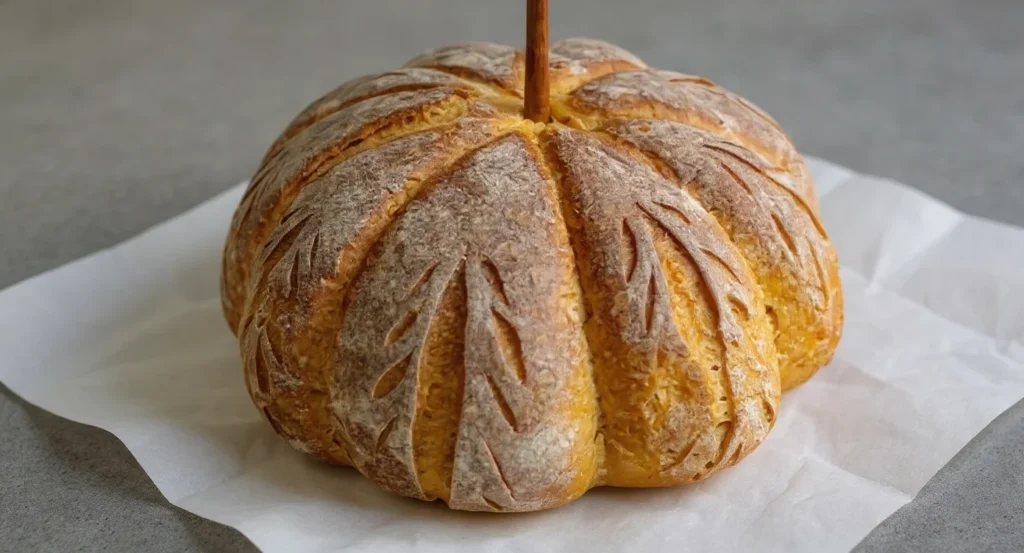
Scoring guides where the loaf expands. A shallow single slash down the length creates a classic ear. A crosshatch or leaf pattern gives a rustic look that suits pumpkin color and texture.
- Make cuts with a sharp lame or razor at a 30–45° angle.
- Score 2–4 mm deep for ear formation without collapsing the loaf.
- Use simple motifs like a long slash plus two side cuts for consistency.
Steam helps the crust stay glossy while the loaf rises. Use a preheated Dutch oven for trapped steam. For ovens without a Dutch oven, try a hot pan with ice cubes or spritz the oven walls with water right after loading the loaf. Aim for strong steam in the first 10–15 minutes of baking.
Baking temperatures, Dutch oven vs. open-oven methods
Oven setup changes bake time and crust. We prefer starting hot to set the crust and boost oven spring.
- For Dutch oven: preheat to 450°F. Bake covered 20–25 minutes, uncover, then bake 10–20 minutes until deep brown.
- For open-oven on a baking stone: preheat stone to 475°F, load loaf, add steam, then lower temp to 425–450°F after 10–15 minutes. Adjust total bake time based on loaf size.
- Check doneness with an instant-read thermometer: target 200–210°F internal temp at the loaf’s center.
Cooling and slicing for optimal texture
Letting the loaf rest is essential. Pumpkin adds moisture that needs time to redistribute. Cool the loaf upright on a rack for at least 1–2 hours. This sets the crumb and prevents gummy slices.
- Slice with a sharp serrated bread knife using a gentle sawing motion.
- For cleaner slices, chill the loaf 10–15 minutes after the initial cool to firm the crumb.
- Store wrapped at room temperature for 2–3 days or freeze sliced pieces in airtight bags for longer keeping.
These steps give a decorative crust, reliable oven spring, and a sliceable crumb that showcases your pumpkin sourdough every time. Happy baking — experiment with patterns and temperatures until you find your signature loaf!
Flavor Enhancements and Add-ins for Pumpkin Sourdough
We love trying new flavors and mix-ins to make pumpkin sourdough special. Small changes in sweeteners, spices, or mix-ins can turn a simple loaf into a festive treat. Here are some clear options and simple rules to help you choose.
Sweetener choices
- Maple syrup adds a deep, earthy sweetness and liquid. Use 3/4 cup maple for 1 cup brown sugar. Reduce water in the dough by about 2 tablespoons per 1/4 cup maple to keep hydration balanced.
- Molasses brings robust, slightly bitter notes that pair well with rye or whole-wheat flours. Swap 1 cup brown sugar for 3/4 cup molasses and cut water by 1–2 tablespoons.
- Brown sugar gives caramel depth with minimal effect on hydration. Use 1:1 when replacing white sugar; no major dough adjustment needed.
- Honey lends floral tones and is more fermentable. Substitute 3/4 cup honey for 1 cup sugar and lower added water by 1–2 tablespoons. Watch fermentation speed; honey can make the starter more active.
- Taste and balance: when using sweeteners, aim for mild sweetness to complement starter acidity. If loaf tastes overly sour, add 1–2 tablespoons of sweetener at the next bake.
Spice blends and timing
- Classic mix: 1–2 tsp ground cinnamon, 1/4–1/2 tsp ground nutmeg, and a pinch (1/16 tsp) of ground cloves per standard loaf.
- Store-bought pumpkin spice works well. Use 1–1.5 tsp of a commercial blend for even flavor.
- Homemade spice blend: 1 tbsp cinnamon, 1 tsp nutmeg, 1/2 tsp ground cloves, 1/2 tsp ginger, and 1/4 tsp allspice. Store airtight and add 1–1.5 tsp to the dough.
- Add spices during the initial mix or autolyse end so they hydrate and distribute evenly. This prevents pockets of intense flavor.
Mix-ins: nuts, dried fruit, chocolate
- Amounts: aim for 1/2 to 1 cup total of mix-ins per loaf. This keeps structure intact and crumb light.
- Nuts: chopped pecans or walnuts add crunch. Toast briefly for more aroma. Fold in during the last two stretch-and-folds.
- Dried fruit: raisins or dried cranberries pair nicely. Toss in 1–2 tsp flour before adding to stop sinking and clumping.
- Chocolate chips: add up to 1 cup for a sweet twist. Use dark chocolate to balance sweetness.
- When to add: incorporate mix-ins late in bulk fermentation or after initial shaping. This keeps distribution even and prevents damage to dough strength.
- Prevent sogginess: rehydrate dried fruit slightly if very dry, then toss with flour. Cut nuts roughly so they fold in without tearing the dough.
Experiment freely and keep notes. Little changes in sweeteners, spice levels, or mix-in timing alter crumb and flavor. We recommend testing one variable at a time for consistent results and joyful baking!
Pumpkin Sourdough Bread Baking Tips for Seasonal Success
We love baking pumpkin sourdough as the days get cooler! This section gives quick, practical tips to keep your loaf light, flavorful, and ready for autumn breakfasts and holiday treats.
Adapting the recipe for fall and cooler climates
Cooler kitchens slow fermentation. Move your proofing bowl near the oven with the light on or use a warm water bath for a stable rise. If your starter is sluggish, feed it on a shorter schedule to boost activity.
Try longer bulk fermentation or an overnight cold retard in the fridge to build depth of flavor. Add a touch more hydration when using dense pumpkin puree to keep the crumb soft.
Storing, freezing, and reheating your pumpkin sourdough loaf
Cool the loaf completely before storing. For short-term freshness, wrap in a linen cloth or paper and keep on the counter for 2–3 days. For longer storage, slice, seal in an airtight bag, and freeze up to 3 months.
Reheat slices in a toaster or warm oven at 350°F for 5–10 minutes to restore crisp crust and tender crumb. Day-old bread shines when refreshed this way.
Serving suggestions: toasts, sandwiches, and desserts
- Savory toast: ricotta, a drizzle of honey or maple, and cracked black pepper for contrast.
- Hearty sandwich: grilled cheese with sharp cheddar and thin apple slices for autumn flair.
- Sweet ideas: French toast or bread pudding made with day-old slices, spiced milk, and a maple glaze.
Keep experimenting with spices and toppings to match the season. We find maple, toasted pecans, and a light glaze make this loaf feel truly autumnal!
Troubleshooting Common Issues with Pumpkin Sourdough Loaves
Baking can sometimes be tricky. Here are quick fixes for common problems with pumpkin sourdough. Try these tips, make small changes, and keep notes for better loaves next time!
Dough too wet or too dry: quick fixes
If your dough is too sticky, do extra stretch-and-folds every 20–30 minutes for an hour. This strengthens gluten and absorbs moisture. When shaping, lightly flour the bench to control stickiness without changing the dough’s hydration.
If your dough is too dry, add water slowly. Start with 10–30 g (about 1–3 tablespoons) during mixing or early autolyse. Let the dough rest 15 minutes after each addition to fully hydrate the flour.
Low oven spring or dense crumb: causes and solutions
A weak oven spring often means a tired starter. Refresh your starter over two or three feeds before baking to boost activity. If gluten feels underdeveloped, add a couple more folds during bulk fermentation.
Overproofing can flatten the loaf. Shorten the final proof or chill the shaped dough in the fridge to slow fermentation. Score deeply and confidently just before baking to guide expansion.
Always confirm your oven and Dutch oven are fully preheated. A hot vessel gives that fast spring we want.
Flavor off or overly sour: balancing acidity and sweetness
Too much sourness can come from long, warm fermentation. Shorten bulk ferment or move the final proof to the fridge to tame acids. If you prefer milder tang, add a touch of maple syrup, 1–2 teaspoons, or 1 tablespoon of oil to balance the profile.
If bread tastes off in a way that suggests contamination—odd, rotten, or unpleasant notes—discard the batch and start fresh. That flavor can signal spoiled pumpkin or a compromised starter.
- Keep notes: record temperature, timing, and hydration for each bake.
- Make one change at a time so you can see what worked.
- Use high-quality pumpkin purée and an active starter for best results.
Conclusion
We’ve explored a simple way to make a delicious pumpkin sourdough loaf. It’s easy and fun for all bakers. Start with a lively starter and mix in pumpkin puree with the right amount of water.
Follow our tips on folding, shaping, and baking for a light, airy loaf. You can also add your own twist with spices, nuts, and seeds. Try a cinnamon swirl or add pecans for extra flavor.
Adjust the sweetness with maple syrup or molasses to your liking. If you run into problems, check our troubleshooting guide. It helps with common issues like dough feel and oven spring.
Remember, check if your starter is ready before you start. Let the loaf cool completely before slicing. And don’t forget to freeze any leftovers for a quick breakfast.
We think cooking should be fun and creative. So, take this recipe and make it your own. Share your creations and we’ll all enjoy a delicious pumpkin sourdough bread together!
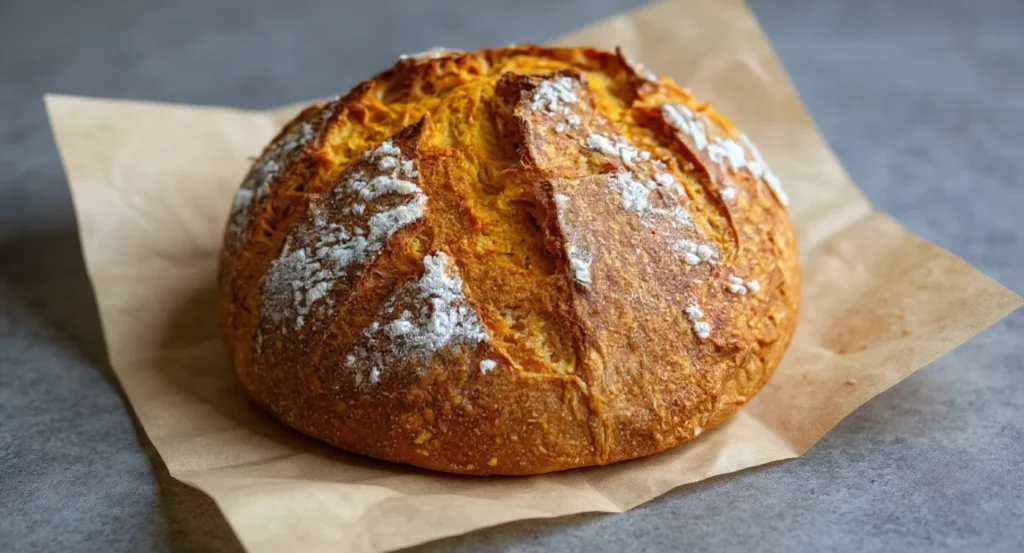
Pumpkin Sourdough Bread Recipe
Short Description
Enjoy a flavorful, fluffy pumpkin sourdough bread with warm spices and a golden crust! This naturally-leavened bread blends pumpkin puree and sourdough starter for the ultimate cozy fall treat. Great as toast, sandwiches, or served simply with butter.
Recipe Details
- Serving Size: 1 slice (about 1/12 of a large loaf)
- Prep Time: 30 minutes (active) + 4–8 hours fermentation & proof
- Cook Time: 40-50 minutes
- Total Time: 6–10 hours
Ingredients per Serving
- 1/2 cup bread flour
- 1 Tbsp whole wheat flour (optional)
- 2 Tbsp pumpkin puree (unsweetened)
- 1 Tbsp active sourdough starter (100% hydration, fed)
- 3–4 Tbsp warm water (as needed)
- Pinch fine sea salt
- 1/4 tsp ground cinnamon
- 1/8 tsp nutmeg
- 1/8 tsp ground ginger
- Pecans or seeds (optional, to taste)
Nutritional Facts
- Calories: 130–160
- Protein: 4–6g
- Carbohydrates: 28–35g
- Fat: 0.5–1g
- Fiber: 1–2g
- Sodium: 220–380mg
- Sugar: 1g
Instructions
Step 1
Feed your sourdough starter a few hours before baking until it is bubbly and active.
Step 2
Mix the bread flour, whole wheat flour, and most of the water with half the pumpkin puree. Let rest for 30–60 minutes (autolyse).
Step 3
Add the active starter, salt, remaining pumpkin, and spices. Gently fold all ingredients together until combined (no need to knead).
Step 4
Let the dough rest and ferment for 3–6 hours at room temperature, with gentle stretch-and-folds every 30–60 minutes (2–4 times). Fold in pecans or seeds if using.
Step 5
Shape the dough into a round or loaf and place into a floured banneton or loaf pan. Cover and proof at room temp (1–3 hours) or in the fridge overnight.
Step 6
Preheat your oven to 450°F (232°C) with a Dutch oven inside. Score the top of the loaf and bake covered for 20–25 minutes, then uncovered for 10–20 minutes more until deep golden brown.
Step 7
Cool completely on a rack for 1–2 hours before slicing. Enjoy fresh or toasted!