
The first time our kitchen smelled like lobster stock and butter was special. It felt like a mini celebration. We wanted that cozy, restaurant-style comfort at home, but without the hassle. This recipe is our solution: a rich, silky lobster bisque that’s easy for anyone to make.
If you’re in the mood for other comforting dishes, try our hearty ground beef taco meat recipe—it’s quick and always a crowd-pleaser for weeknight dinners.
We make restaurant techniques simple and friendly. We focus on deep seafood flavor and a smooth texture. You can start from scratch or use pre-cooked lobster and store-bought stock to save time without losing flavor.
For another shortcut-friendly seafood dish, check out our easy air fryer tuna steak recipe—you’ll love how effortless it is to bring gourmet seafood to your table.
We’ll guide you through the tools, ingredients, and methods. This way, you can make a lobster soup that’s both luxurious and visually appealing. Let’s start cooking and make this classic dish a weeknight favorite!
Key Takeaways
- This Easy Lobster Bisque Recipe is rich and creamy but designed for home cooks.
- We offer both scratch and shortcut methods to suit your time and skill.
- Clear, step-by-step guidance makes the recipe friendly for all levels.
- Simple tools and smart prep tips keep the process streamlined.
- Options for no-alcohol and lighter versions let you customize easily.
Why This Easy Lobster Bisque Recipe Is Worth Trying
We adore recipes that pack a punch with minimal effort. This Easy Lobster Bisque Recipe offers restaurant-quality taste without the fuss. It’s ideal for a quick weeknight dinner or a fancy dinner party.

What makes this recipe "easy" compared to restaurant-style versions
We’ve simplified the process by skipping long reductions and tricky emulsions. Roasting the shells quickly extracts rich flavors. And, using an immersion blender or countertop blender makes the soup silky smooth in no time.
- Use pre-cooked lobster tails to skip lengthy cooking.
- Substitute concentrated seafood stock or clam broth for a homemade stock when time is tight.
- Sauté a simple mirepoix and add tomato paste for instant umami and color.
Flavor profile: rich, creamy, and savory seafood notes
The mix of sweet lobster meat and briny stock is a match made in heaven. A simple mirepoix and tomato paste add depth and color. A splash of sherry or brandy adds a touch of elegance.
Heavy cream makes the soup velvety and carries the flavors beautifully. The result is a silky, balanced, and lingering taste experience. It’s a perfect blend of sweet and savory with a hint of seafood.
Who will love this recipe
Home cooks looking for restaurant-quality results without the hassle will love this bisque. Seafood lovers will enjoy the authentic lobster taste.
- Hosts planning a special occasion can prep parts in advance for a stress-free service.
- Busy families can use quick shortcuts like store-bought stock or pre-cooked lobster tails.
- Anyone testing their knife and blender skills will find this recipe welcoming and reliable.
Let’s create something delicious and accessible together. This bisque shows that gourmet can be easy!
Ingredients for a Homemade Lobster Bisque Recipe
We keep the ingredient list simple so you can shop and cook with ease. Start with quality lobster and add layers of flavor with pantry items. Below, we list the essentials, optional enhancers, and easy swaps for no-alcohol or lighter versions.
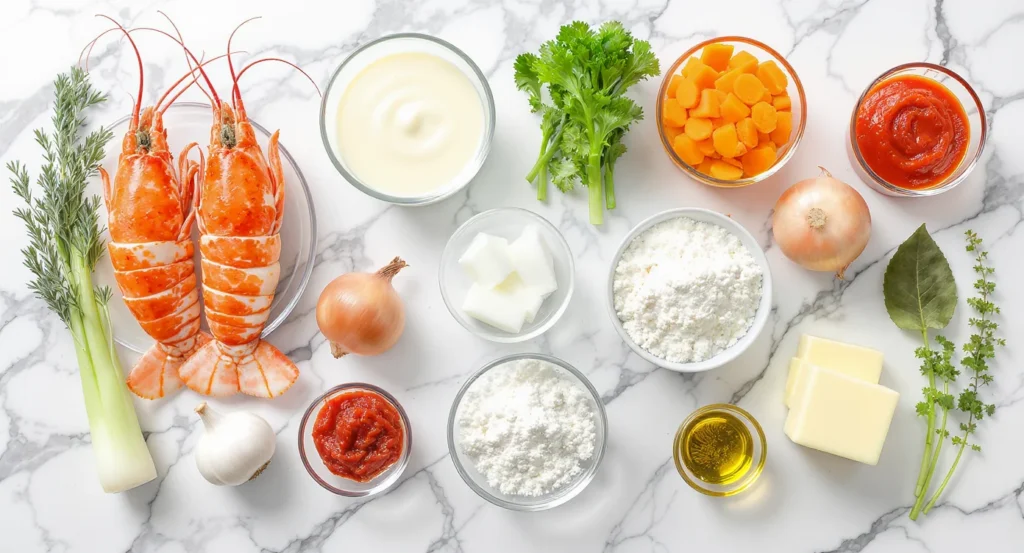
Essential ingredients and purposes
- Lobster: Use tails or whole lobsters. Reserve meat for garnish and use shells to make a rich stock.
- Stock: Simmer lobster shells with aromatics for the best depth. If short on time, low-sodium seafood or fish stock works well.
- Cream: Heavy cream or half-and-half adds silkiness. Swap in crème fraîche for a touch of tang.
- Aromatics: Onion, carrot, and celery form a mirepoix. Add garlic and tomato paste for savory backbone.
- Fats: Butter plus a splash of olive oil gives flavor and prevents butter from burning.
- Thickener: Make a roux from butter and flour, use a cornstarch slurry, or simply reduce the stock for natural thickness.
Optional flavor enhancers and why they matter
- Sherry or brandy: Deglaze the pan and layer in warm, nutty notes that lift the broth.
- Dry white wine: Adds bright acidity and complexity to the bisque.
- Herbs: Tarragon, thyme, and bay leaf give subtle, complementary aromatics.
- Spices: A pinch of smoked paprika or cayenne provides warm depth without overwhelming the lobster.
Swaps for no-alcohol and lighter versions
- Alcohol-free deglaze: Use white grape juice with a splash of vinegar or extra lemon juice instead of sherry or brandy.
- Lighter dairy: Half-and-half or tempered Greek yogurt cuts fat while keeping creaminess.
- Gluten-free thickener: Use cornstarch or a gluten-free flour blend in place of wheat flour.
- Quick stock: Pre-made low-sodium seafood stock saves time and lowers calories while still supporting flavor.
We recommend tasting as you go. Small adjustments to acidity, salt, and cream will bring the bisque to the perfect balance for your table!
Kitchen Tools and Equipment for Simple Lobster Bisque Recipe
We choose tools that make making bisque quick and easy. The right tools keep flavors good and save time. Here’s a quick list of essentials, plus tips for keeping your kitchen clean after working with shellfish.

Must-have tools and why they matter:
- Heavy-bottomed pot or Dutch oven — holds even heat for simmering lobster stock without hot spots.
- Blender or immersion blender — creates a silky emulsion; an immersion blender keeps everything in the pot and cuts transfers.
- Fine-mesh strainer or chinois — essential to remove tiny shell bits and make the bisque smooth.
- Ladle and wooden spoon — ladle for skimming and portioning, wooden spoon for gentle stirring so the cream won’t break.
Tools that speed up prep:
- Kitchen shears — quick way to open lobster tails and remove meat cleanly.
- Seafood crackers — save time on claws and increase yield with less fuss.
- Food processor — great for quick mirepoix chopping or briefly blitzing shells to extract flavor; use short pulses and caution.
- Bench scraper and fish tweezers — keep your workspace tidy and remove stray bones from meat.
Cleaning and safety tips after shellfish prep:
- Rinse shells and utensils right away to prevent lingering odor and stuck-on residue.
- Soak wooden spoons and fine strainers in hot, soapy water before scrubbing to loosen bits.
- Sanitize cutting boards and counters after handling raw shellfish to avoid cross-contamination.
- Keep separate utensils for raw lobster and finished bisque. Run metal tools through the dishwasher when possible.
It’s smart to have a small station for shelling and another for cooking. This simple setup cuts down on cleanup time and keeps flavors pure. Let’s get cooking! 🍴
Step-by-Step Preparation for Homemade Lobster Bisque Recipe
We guide you through each step to make your lobster bisque rich and smooth. Follow these steps carefully and keep your tools and ingredients ready. Taking small steps can greatly improve the taste and texture of your bisque!
Preparing lobster meat
- Choose tails or whole lobsters based on time and budget.
- For tails: broil or poach. Broil at high heat about 1 to 1.25 minutes per ounce until meat is firm and opaque. Aim for an internal temp near 140–145°F.
- For whole lobsters: boil, steam, or roast. Cook 8–12 minutes depending on size. Remove meat from tails and claws, then reserve shells.
- Pick the meat gently, chop into bite-size pieces, and refrigerate a portion to finish the soup.
Making lobster stock from shells
- Rough-chop shells and roast or sauté with a tablespoon of oil or butter and a classic mirepoix (onion, carrot, celery).
- Add 1–2 tablespoons tomato paste and brown briefly to boost color and umami.
- Deglaze with a splash of dry white wine or water, cover with cold water, then simmer 30–45 minutes. Extend simmering for deeper flavor if time allows.
- Strain through a fine mesh strainer. Reduce the stock over medium heat if you need a more concentrated base.
Building the bisque
- Sauté a fresh mirepoix in butter until soft and translucent. Season lightly.
- Sprinkle in flour and cook a minute to form a light roux. This tames raw flour taste and gives body.
- Slowly whisk in the strained lobster stock. Bring to a gentle simmer and cook 10–15 minutes to marry flavors.
- Stir in cream and a portion of reserved lobster meat. For extra depth, purée a small batch of meat with a bit of stock and add it back.
- Use an immersion blender or countertop blender to purée until smooth. Strain again through a fine sieve for the silkiest texture.
- Finish with a pat of butter, a splash of dry sherry or a squeeze of lemon, and taste for salt and pepper. Fold in the remaining lobster chunks just before serving.
Remember to taste at each stage and adjust seasoning as needed. Serve hot with crusty bread and a simple herb garnish. Enjoy making a restaurant-quality bisque at home!
If you’re craving more shellfish classics, don’t miss our buttery warm lobster rolls recipe—they’re perfect for summer meals or elegant parties.
Cooking Tips to Achieve a Creamy Lobster Bisque
We want your lobster bisque to be silky, balanced, and restaurant-worthy without the fuss. Follow these targeted tips for stable cream, smooth texture, and bright flavor. Short steps keep the process calm and the results consistent.
How to avoid curdling when adding cream
Temper the cream by stirring a few spoonfuls of hot stock into the chilled cream. Mix slowly, then add that warmed cream back into the pot. Use heavy cream for more stability; its higher fat helps prevent separation. Keep the bisque at a gentle simmer after dairy goes in. Never boil aggressively.
Texture control: thickening methods and straining for silkiness
Choose a thickening method that fits your timeline: a light roux gives body and flavor, beurre manié refines viscosity, and a cornstarch slurry works fast for last-minute adjustments. Reducing the broth concentrates flavor and texture without extra starch.
Blend the soup with an immersion blender until cohesive. Strain through a fine-mesh sieve or chinois to remove bits and achieve a smooth mouthfeel. Finish with a glossy knob of butter to emulsify and add shine.
Balancing seasoning and acidity for depth of flavor
Season in stages. Add salt and white pepper during cooking, then taste as the bisque cools slightly. Flavors concentrate as it rests, so final adjustments should come near the end. Brighten the bisque with a few drops of lemon juice or sherry vinegar right before serving.
If the soup needs warmth, a pinch of smoked paprika or a dash of cayenne brings subtle heat without hiding lobster flavor. Small tweaks produce big payoff.
Variations: Simple Lobster Bisque and Classic Lobster Bisque Recipe Tweaks
We enjoy experimenting with bisque recipes to meet different needs. Here are some tweaks to make a simple lobster bisque more special or lighter. These changes can make it perfect for any occasion or dietary preference.
- Add a splash of dry sherry or Cognac during deglazing, then flambé briefly for bright aroma and warmth.
- Finish with a spoonful of crème fraîche for silky richness and a gentle tang.
- Stir in lobster roe when available to deepen color and boost seafood intensity.
Creamy versus lighter bisque
- For a full cream bisque, use heavy cream or crème fraîche for a luxurious mouthfeel.
- To lighten the soup, swap heavy cream for half-and-half, evaporated milk, or tempered Greek yogurt and concentrate the stock to keep flavor punchy.
- Use pureed potato or cauliflower as a thickener when you want volume without added fat.
No-alcohol and dietary modifications
- Replace wine or sherry with white grape juice plus 1 teaspoon white wine vinegar, or add extra lemon for acidity.
- For gluten-free thickening, choose rice flour or cornstarch slurry instead of wheat flour.
- Make a dairy-free bisque with coconut cream for richness, noting coconut flavor, or blend soaked cashews into a smooth cashew cream for neutral, luxurious body.
We recommend making one change at a time. This way, you can adjust the balance and texture. Small changes help keep the lobster flavor prominent while meeting your dietary needs or desired style.
How to Make a Quick Lobster Bisque Recipe Without Sacrificing Taste
We all love a rich lobster bisque, but time is often short. With smart shortcuts and a few pro tips, we can whip up a silky, flavorful bisque in under an hour. Choose quality store-bought items and focus on technique for the best results.
Time-saving shortcuts
- Use a high-quality seafood base like Better Than Bouillon diluted to taste. It builds depth without hours of simmering.
- Buy pre-cooked lobster tails or frozen lobster meat. Add it at the end to avoid rubbery texture.
- Grab roasted tomato paste and pre-chopped mirepoix from the produce or grocery deli to skip prep time.
Quick thickening and flavor concentration techniques
- Reduce the stock briefly over medium-high heat to concentrate flavor in 8–10 minutes.
- Make a small roux with butter and flour, then whisk in hot stock for immediate body.
- For a faster route, use a cornstarch slurry (1 tsp cornstarch mixed with 1 tbsp cold water) and stir into simmering soup until it thickens.
- Add a splash of lemon juice or white wine vinegar at the end to brighten the finish and lift richness.
Meal prep hacks and freezer-friendly options
- Make lobster stock and the bisque base ahead. Freeze in airtight containers or ice cube trays for easy portions.
- Store cooked lobster meat separately in the fridge or freezer. Fold it in when reheating so it stays tender.
- Label and date batches. Bisque keeps well in the freezer up to three months. Reheat gently over low heat to prevent curdling.
We recommend tasting as you go. Small adjustments—salt, acid, or a pat of butter—bring the bisque to life fast. Enjoy a restaurant-style bowl at home with less fuss and more flavor!
Seafood Pairings and Serving Suggestions for Lobster Bisque
We love serving lobster bisque with simple, bold companions that let the soup shine. A warm bowl deserves a thoughtful pairing. Below are easy options that lift flavor and add texture for weeknight dinners or festive gatherings.
Choose bread that soaks up the bisque without falling apart. Crusty baguette slices work great. Sourdough brings a tang that cuts richness. Herbed brioche toast adds a buttery, slightly sweet note that guests adore.
- Garnish ideas: Reserve chunks of lobster meat and spoon them on top. Add a light drizzle of cream and a sprinkle of chopped chives or fresh tarragon for color and lift.
- Crunch: Buttered croutons or toasted oyster crackers give a nice contrast to the silkiness of the soup.
- Luxury touch: A small spoonful of caviar makes the bowl feel decadent for special occasions.
Pick drinks that match the bisque’s creamy texture and sweet shellfish notes. White wines with moderate oak and bright acidity pair well. Sparkling options add a celebratory fizz. Nonalcoholic choices keep the meal fresh and light.
- Chardonnay (unoaked or lightly oaked) balances cream and lobster richness.
- Sauvignon Blanc or Vermentino bring herbal and citrus edges that cut through the cream.
- Champagne or Prosecco adds acidity and a festive feel.
- For zero-proof pairings try sparkling water with lemon or a chilled citrus iced tea.
Presentation can turn a simple starter into a memorable moment. Warm bowls keep the bisque at the right temperature. A shallow, wide bowl shows off garnishes. Small cups work well as elegant amuse-bouches at dinner parties.
- Warm shallow bowls before plating so the bisque stays hot longer.
- Place a nest of reserved lobster meat in the center, then ladle the soup around it.
- Finish with a gentle swirl of cream and a fine sprinkle of herbs for contrast.
- Offer bread on a separate plate to keep textures crisp until guests dip in.
We recommend testing one bread and one drink pairing together before serving. Small trials help you find the combo that sings at your table. Cheers to creative, cozy meals that feel like a treat! 🥂
Nutrition and Dietary Considerations for Lobster Bisque
We love serving lobster bisque at dinner parties and cozy weeknight meals! It tastes luxurious but can be rich. Looking at nutrition helps us make better choices without losing flavor.
Calorie, fat, and protein overview
One cup of classic creamy lobster bisque has 250 to 500 calories. Heavy cream and butter increase calories and saturated fat. Lobster meat adds lean protein and a nice seafood taste. For a detailed breakdown of lobster’s nutrients, you’ll find a comprehensive comparison on USDA lobster nutrition facts.
Store-bought stock can add sodium. We suggest tasting the stock before adding salt. For more on how dietary cholesterol and different types of fat impact heart health, take a look at Harvard Nutrition’s fat and cholesterol resource and the Mayo Clinic’s guide to fat.
Allergen notes and safe swaps
Lobster is a common shellfish allergen. Inform guests and label dishes clearly. Cross-contact risks increase when utensils and cutting boards touch shellfish then other foods.
For those with shellfish allergies, use firm white fish or make a pureed vegetable bisque. Use separate prep surfaces and tools to keep the meal safe.
Lower-fat and gluten-free adaptations
- Replace heavy cream with half-and-half or evaporated skim milk to reduce calories while keeping richness.
- Puree roasted cauliflower, potatoes, or carrots into the soup for natural thickness and flavor.
- Thicken with cornstarch slurry or a gluten-free flour blend instead of traditional roux.
- Choose low-sodium broth and skip added salt until the end to manage sodium intake.
We encourage testing these tweaks in small batches. This way, we keep the bisque creamy, tasty, and tailored to guests’ dietary needs!
Lobster Bisque with Sherry and Other Flavor Enhancements
We love adding a splash of spirit or a clever substitute to lift the bisque. A small amount of alcohol brightens the stock. It teases out fond from the pan and brings a warm, nutty sweetness. This sweetness pairs perfectly with lobster. For cooks who skip booze, there are smart swaps that keep depth and balance.
- Deglaze the pan with dry sherry or brandy after sautéing shells and aromatics. The liquid lifts browned bits and adds complex aroma.
- Use just a few tablespoons and simmer to cook off harsh alcohol. Flambéing brandy concentrates flavor while removing most spirits.
- The brief cook time preserves sweetness and gives a gentle, nutty finish that blends into the cream.
Alcohol-free alternatives that replicate depth of flavor
- White grape juice with a teaspoon of apple cider vinegar or lemon juice mimics acidity and fruit notes without tasting sweet.
- A small dash of miso or light fish sauce gives umami. Use sparingly to avoid overt saltiness.
- Concentrated mushroom stock or roasted tomato paste adds savory backbone when reduced with a bit of water.
Herbs and spices that complement lobster without overpowering
- Tarragon and chives amplify lobster’s natural sweetness. Add fresh at the end for a bright finish.
- Thyme and bay leaf belong in the simmering stock for steady, savory support.
- Smoked paprika or a pinch of cayenne gives warmth and depth. Start small and adjust to taste.
We suggest tasting as you go. Add alcohol or a substitute early, then tweak herbs and spices near the end. This approach keeps the bisque balanced and full of layered flavor!
Easy Lobster Bisque Recipe with Lobster Tails and Other Seafood Options
Lobster bisque is super flexible! You can make a smooth, fancy soup with lobster tails. Or, you can mix in shrimp, crab, or scallops for a bold twist. Your choice affects the flavor, cost, and how long it takes to make.
Using lobster tails is quicker and cleaner. They’re easy to portion and perfect for fancy bowls. Keep the shells for a richer stock. But, whole lobster gives even more flavor and body, though it’s more work and expensive.
Think about what’s available and your budget. Frozen lobster tails from brands like SeaPak or Maine Lobster Now are always an option. Whole Maine lobsters are best for special meals, offering deep lobster flavor.
Adding other seafood can save money or mix up the texture. Shrimp, lump crab, and sea scallops are great in bisque. For a cheaper option, try firm white fish like cod or haddock.
- For a chowder twist, add diced potatoes and cut back the cream for a chunkier finish.
- To keep a lobster-forward soup, use a smaller portion of substitute seafood and reserve lobster meat as garnish.
Timing is crucial with delicate shellfish. Shrimp and scallops cook fast; add them near the end. Lobster meat can get tough if boiled; gently fold it in and warm it in the bisque.
For the best stock, simmer shells for 30–60 minutes. This pulls out all the flavor for a richer bisque. If using tails only, roast the shells briefly for extra flavor before simmering.
Follow these tips to make great bisque without losing quality. We encourage you to try different mixes that fit your taste and budget. Happy cooking!
Common Mistakes and Troubleshooting for Lobster Bisque Recipe
We want your lobster bisque to be perfect. Small mistakes can ruin a great soup. Here are quick fixes for texture, overcooked lobster, and off flavors. This way, you can impress your guests!
Fixing a bisque that’s too thin or too thick
Too thin? Reduce the bisque over moderate heat until it coats a spoon. For a quicker fix, mix softened butter and flour to make beurre manié. Then, whisk it into the bisque.
For a fast thickening, mix cornstarch with cold water. Stir it into the simmering liquid.
Too thick? Whisk in hot lobster stock, water, or warm milk slowly. This will lighten the texture. If lumps form, blend and strain through a fine sieve.
Recovering from overcooked or rubbery lobster
- If lobster meat is rubbery, remove it from heat right away to stop further cooking.
- Chop the meat finely and fold it into the bisque so the texture blends and feels tender in every spoonful.
- Gently poach the chopped meat in a small amount of warm bisque liquid for a minute to soften fibers without overcooking.
Dealing with blandness or overpowering alcohol flavors
Bland bisque? Concentrate flavor by reducing the soup a bit. Add a splash of lemon juice or sherry vinegar. Adjust salt and pepper to taste. A pinch of smoked paprika or a few drops of soy sauce can add savory depth.
Too much alcohol from sherry or brandy? Simmer longer to evaporate volatile alcohol. If flavor still overwhelms, add unsalted stock and a dash of cream or a tiny bit of sugar to rebalance. For a salty pot, dilute with unsalted stock or stir in mashed potato or extra cream to absorb excess salt.
Conclusion
We’ve explored why making lobster bisque is easy. We listed what you need and how to do it step by step. This way, anyone can make it at home.
We talked about making a rich lobster stock and blending it gently. We also showed how to add cream without it curdling. And, we shared fixes for common issues like a thin or bland bisque.
With a few smart tricks, you can make an Easy Lobster Bisque Recipe like a pro. We mentioned using store-bought stock or pre-cooked lobster tails to save time. We also gave tips for making it ahead or freezing it for later.
Try the recipe and see what you can change. Add sherry, use whole lobster, or try a seafood version. Share your photos and thoughts. We love seeing your creations and helping you improve.
Let’s keep cooking fun, creative, and delicious!

Easy Lobster Bisque Recipe
Short Description
This easy lobster bisque recipe brings cozy, restaurant-style comfort to your home kitchen with rich flavor, silky texture, and straightforward steps—ideal for weeknight dinners or special occasions.
Recipe Details
- Serving Size: 4 bowls
- Prep Time: 20 minutes
- Cook Time: 35 minutes
- Total Time: 55 minutes
Ingredients per Serving
- 1 lobster tail or 3 oz cooked lobster meat, shells reserved
- 1 cup seafood or fish stock (or clam broth)
- 1/2 cup heavy cream
- 1/4 cup onion, chopped
- 1/4 cup carrot, chopped
- 1/4 cup celery, chopped
- 1 tbsp tomato paste
- 1 tbsp unsalted butter
- 1 tbsp all-purpose flour (or cornstarch for gluten-free version)
- 1 clove garlic, minced
- 1 tbsp olive oil
- 1 bay leaf
- Pinch smoked paprika or cayenne (optional)
- Salt and white pepper, to taste
- Optional: 2 tbsp dry sherry or brandy (or white grape juice + splash lemon juice for non-alcoholic)
- Fresh chives or tarragon, for garnish
Nutritional Facts
- Calories: 320
- Protein: 15g
- Carbohydrates: 9g
- Fats: 22g
- Fiber: 2g
- Sodium: 620mg
- Sugar: 4g
Instructions
Step 1
Cook lobster tail by broiling or poaching until firm and opaque (about 1 to 1.25 minutes per ounce or until the internal temperature reaches 140–145°F). Reserve the lobster shells for stock and chop the meat into bite-size pieces; refrigerate meat for garnish.
Step 2
Make lobster stock: Rough-chop the reserved shells and sauté with onion, carrot, and celery in olive oil and butter for 3–4 minutes. Add tomato paste and garlic, brown briefly, then deglaze the pan with sherry (or white grape juice). Cover with seafood stock and add bay leaf; simmer for 30 minutes, then strain.
Step 3
In a clean pot, melt butter over medium heat. Sauté mirepoix (onion, carrot, celery) until soft. Stir in flour (or cornstarch for gluten-free) and cook for 1 minute to form a light roux.
Step 4
Slowly whisk the strained lobster stock into the pot. Simmer gently for 10–15 minutes to develop flavor. Sprinkle in smoked paprika or cayenne if desired.
Step 5
Fold in half of the chopped lobster meat and pour in heavy cream. Use an immersion blender or countertop blender to purée until smooth. Strain again for extra silkiness, if preferred.
Step 6
Finish with salt, pepper, and a squeeze of lemon or splash of sherry. Add the remaining lobster chunks just before serving for texture. Ladle the hot bisque into bowls and garnish with fresh chives or tarragon. Enjoy with crusty bread!