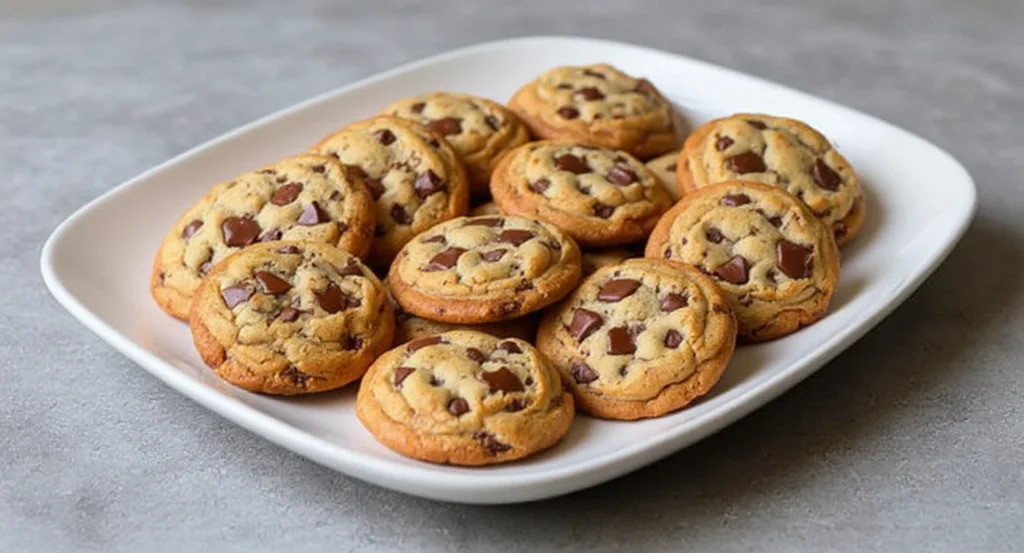
Do you remember the first time a warm, chewy chocolate chip cookie made you smile? It’s that soft center, the faintly crisp edge, and the chocolate in every bite. It’s comfort and celebration in one small circle. We want to bring that joy to you, right now, from your own oven.
This guide will show you how to make ultra-chewy, bakery-style Chewy Chocolate Chip cookies. We’ll cover essential ingredients, mixing and baking techniques, and a brown butter option. Plus, we’ll share tips for thick, crispy, or extra-chewy Chocolate Chip cookies, similar to the satisfying texture in our classic chocolate chip banana bread — a moist treat that’s just as comforting with chocolate chips nestled throughout.
We’ll also give you time-saving shortcuts, allergy-friendly swaps, and storage tips. And, we’ll help you fix any baking mishaps. Our goal is to make baking fun and accessible for everyone, no fancy equipment needed.
Key Takeaways
- This guide delivers a simple, step-by-step Chocolate Chip Cookie Recipe for soft, moist, chewy cookies with a slight crisp edge.
- We explain how flour, sugar, fats, and eggs shape chewiness and texture.
- You’ll learn mixing methods, chilling tips, and baking times for consistent results.
- Options include brown butter, thick or crispy tweaks, and allergy-friendly swaps.
- Quick shortcuts and storage advice make baking easy for busy home cooks.
Why This Is the Best Chewy Chocolate Chip Cookie Recipe
We love cookies that are crisp on the outside and soft on the inside. This section explains why our Best Chewy Chocolate Chip Cookie Recipe is so special. It combines taste and texture in the perfect way. It’s better than other cookie styles in many ways. Follow along to see why it’s so good.
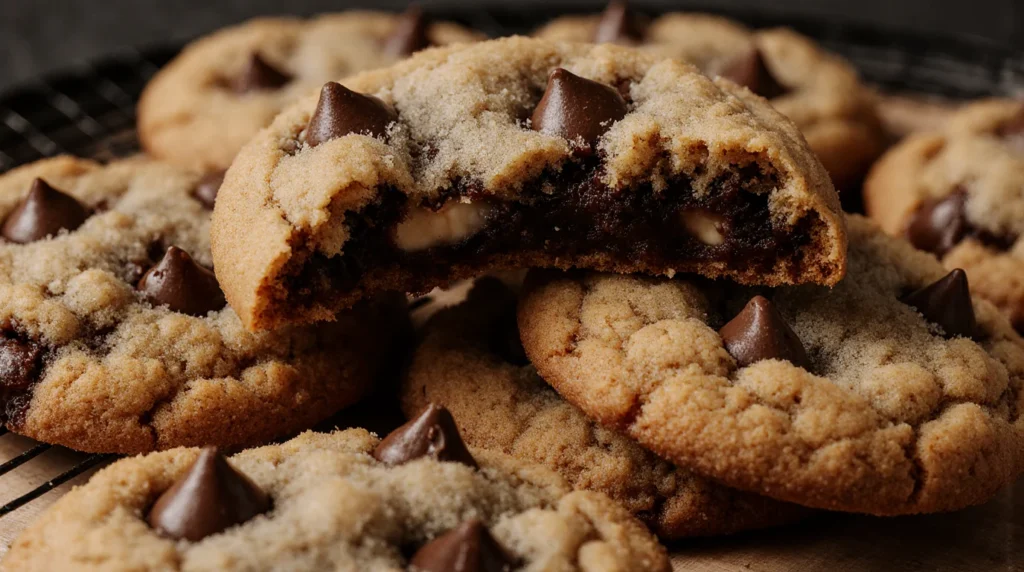
What makes a Chocolate Chip cookie truly chewy
Chewiness comes from keeping the cookie moist and the gluten soft. We mix gently to avoid toughening the cookie. This makes it soft and chewy.
Brown sugar is key because it holds onto moisture. It slows down the cookie’s drying out, much like in our easy sweetened condensed milk brownies that stay fudgy and perfectly moist with a lovely chewy bite.
How this Best Chewy Chocolate Chip Cookie Recipe balances texture and flavor
We use top-quality ingredients for flavor. This includes pure vanilla, flaky salt, and chocolate from brands like Ghirardelli or Guittard. Salt enhances the sweetness without overpowering it.
For texture, we mix creamed butter and brown sugar. This makes the Chocolate Chip cookie tender and slightly caramel-like. A short chill and controlled baking give a moist center and crispy edges. Letting the cookies rest for a few minutes helps them stay moist.
Comparisons to other popular cookie styles
Thin, crispy cookies use more white sugar and butter. They spread a lot and bake until crispy. They have a nice snap.
Cakey cookies use more flour or egg whites. They rise and feel light, like a small cake.
Flat, glossy cookies use high oven heat and more butter. They spread a lot and have a shiny top. Our Best Chewy Chocolate Chip Cookie Recipe is a mix of bakery-style chew and home-baked comfort. It has a crisp edge, soft center, and deep flavor.
Essential Ingredients for Soft Chocolate Chip Cookies
We make Chewy Chocolate Chip Cookies with a few simple ingredients. Each one is important for texture and taste. Choose high-quality ingredients and measure carefully for the best results!
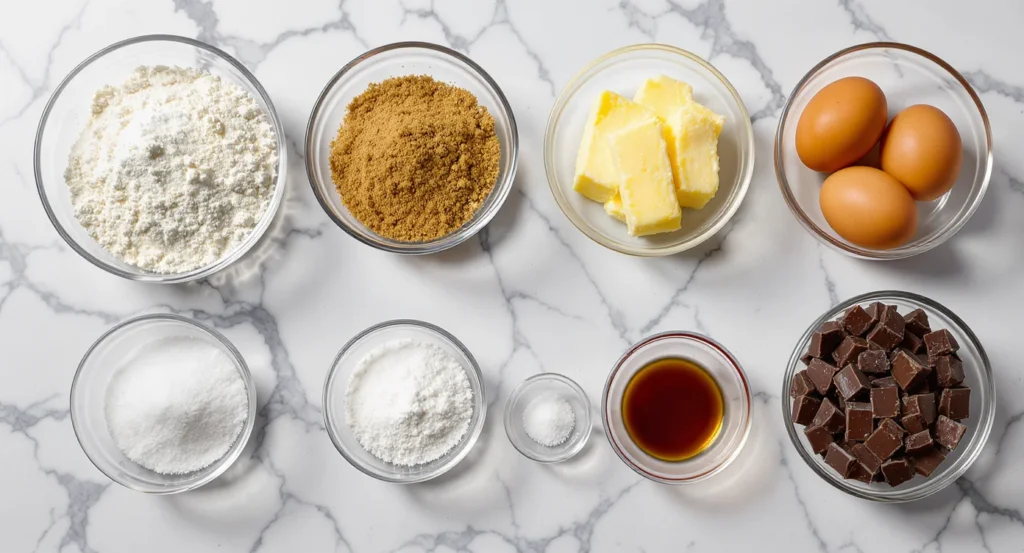
All-purpose flour gives the cookie structure. Use a bit less than usual to keep it tender. Use a scale or spoon-and-level for consistent results.
Brown sugar keeps the cookie moist and chewy. Dark brown sugar adds a deeper flavor. We prefer brown sugar over granulated for a softer center.
Granulated sugar helps with spread and a slight crisp on the edges. Balance both sugars to get the right chew and snap.
Unsalted butter adds flavor and mouthfeel. Softened butter is classic, while browned butter adds a toasty flavor.
Eggs supply structure and moisture. Adding an extra yolk or using one whole egg plus one yolk boosts chew and richness without making it cakey.
Baking soda gives a gentle lift and promotes browning. Use the right amount to avoid over-rise.
Salt sharpens flavors and balances sweetness. A sprinkle of flaky sea salt on top brightens each bite. For more on how salt affects flavor and your health, explore this informative resource about salt and sodium from the Mayo Clinic salt and sodium facts page.
Vanilla extract enhances all the other flavors. Pure vanilla makes a big difference.
Here’s a quick ingredient checklist with purpose:
- All-purpose flour — structure; slightly reduced for tenderness
- Brown sugar (light or dark) — moisture, chew, caramel notes
- Granulated sugar — spread and edge crispness
- Unsalted butter — flavor and mouthfeel; room temp or browned
- Egg(s) — structure and chew; extra yolk for richness
- Baking soda — lift and browning
- Salt — flavor balance
- Vanilla extract — flavor enhancer
For chocolate and mix-ins, choose premium brands for melt and texture. Ghirardelli, Guittard, Callebaut, and Valrhona bars chop into irregular pieces that create molten pockets. Chocolate chips hold their shape and give uniform bites. If you love cookies, you’ll also want to try our double chunk chocolate cookie recipe for an extra indulgent treat — it’s packed with rich chocolate chunks and a perfect chewy texture.
Try mix-ins like toasted pecans or walnuts for crunch, or finish with sea salt flakes for contrast. Chunk size matters: small chips yield even distribution, large chunks give gooey, melty centers.
Kitchen Tools and Equipment for Perfect Cookies
We love tools that make Chocolate Chip cookie baking simple and repeatable. The right gear keeps texture steady and flavor bright. Below we list essentials and a few upgrades that raise your cookies to bakery level, plus clear tips on weighing vs. scooping.
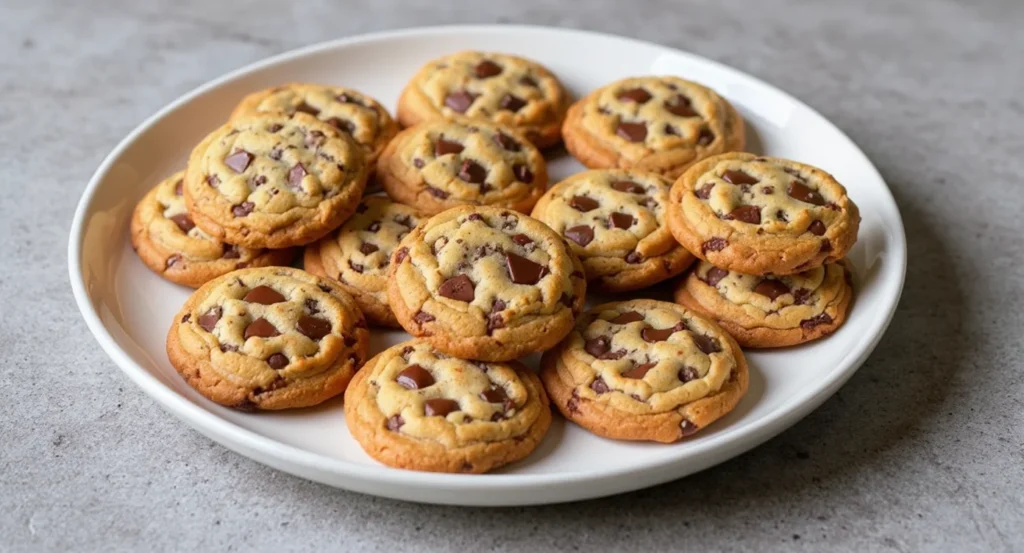
Must-have tools for consistent results
- Mixing bowl — a sturdy bowl for hand mixing or a bowl for your KitchenAid stand mixer helps with even creaming.
- Rubber spatula — scrape every bit of batter so no butter or sugar is wasted.
- Light-colored baking sheets — they brown cookies evenly and prevent overbrowning on the bottom.
- Parchment paper or silicone baking mats — they stop sticking and cut cleanup time.
- Cookie scoop — a 1.5 tablespoon scoop gives uniform cookies that bake at the same rate.
- Cooling rack — lifting cookies off the pan stops carryover heat and keeps bottoms crisp without drying the top.
Optional equipment that elevates bakery-style Chocolate Chip cookies
- Kitchen scale — best upgrade for consistent batches, especially when adjusting hydration and flour.
- Digital instant-read thermometer — check butter temperature or verify oven accuracy fast.
- Baking stone or steel — provides even heat and a better rise when you want a bakery crust.
- Stand mixer with paddle attachment — saves time and gives reliable creaming for large batches.
Tips for using a scale vs. measuring cups
We recommend weighing ingredients when possible. Weighing removes the guesswork that comes with scooping flour. For chewier Chocolate Chip cookies, small differences in flour matter.
Quick conversion tip: 1 cup all-purpose flour ≈ 120 g when you want a softer, chewier crumb. That number keeps results predictable across ovens and kitchens.
When you must use cups, spoon flour into the cup, level it, and avoid packing. If you bake often, invest in a 0.1 gram kitchen scale. You’ll see the difference in texture and consistency across batches.
Step-by-Step Recipe: Best Chewy Chocolate Chip Cookie Recipe
We guide you through each step to make baking easy and fun. Follow each part, gather your tools, and stick to the timing. This way, you’ll get a chewy, soft Chocolate Chip cookie that’s just like the ones from the bakery.
Preparation and ingredient setup (mise en place)
Start by softening unsalted butter or browning it for a nutty flavor. Then, measure out flour, brown sugar, granulated sugar, baking soda, and salt into separate bowls.
Crack eggs and have vanilla ready. Chop a bar of Ghirardelli or prepare Nestlé Toll House chips. Finally, preheat your oven to the right temperature so it’s ready when you are.
Mixing method for maximum chewiness
Cream the butter with both sugars until it’s light and slightly airy. You want a texture that’s chewy but not too fluffy. This mix is key to achieving the perfect chew.
Add eggs one at a time, mixing just until they’re fully incorporated. For even more chew, add an extra yolk. Then, fold in the dry ingredients with a spatula until they’re just combined. This helps avoid tough cookies.
Stir in chopped chocolate or chips gently. If you’re using mix-ins like toasted walnuts, add them with the same care. The goal is to keep the dough smooth and not overworked.
Shaping, chilling, and portioning tips
- Use a 2-tablespoon scoop for smaller treats or a 3-tablespoon scoop for bigger cookies.
- Roll dough into tight balls for height. Chill on a tray for at least 30 minutes. Overnight chilling deepens flavor and reduces spread.
- No-chill shortcut: press dough into rounds and chill 10–15 minutes, then bake. Expect slightly more spread.
- Space scoops 2 inches apart on a baking sheet. For thicker cookies, use a baking rack under the sheet to slow spreading.
Yields and bake times: about 36 small cookies (2 tbsp) at 9–11 minutes, or 24 larger cookies (3 tbsp) at 11–13 minutes. Watch edges for light golden color and centers that still look soft.
Baking Techniques for Soft, Moist Chocolate Chip Cookies
We want your Chocolate Chip cookies to be tender and have a glossy center. They should be golden at the edges. Making small changes to oven settings and timing can make a big difference. Here are some tips from our test kitchen to bake with confidence!
Oven temperature and timing guidelines
- Set the oven between 350°F and 375°F. Choose 350°F for thicker, chewier cookies and 375°F for slightly crisper edges.
- Bake times vary by scoop size:
- Small scoop (1 tbsp): 7–9 minutes.
- Medium scoop (2 tbsp): 9–11 minutes.
- Large scoop (3 tbsp): 11–14 minutes.
- Pull cookies a bit early. Slightly underbaked centers become perfectly chewy as they rest on the sheet.
How to tell when Chocolate Chip cookies are perfectly baked
- Look for edges that are set and a light golden color.
- Centers should still look glossy and soft, not dry.
- Use the touch test: press the center gently. It should spring back a little and keep a faint impression.
- Let Chocolate Chip cookies rest on the baking sheet 2–3 minutes. They will finish baking from residual heat, then move to a rack.
Using a baking stone, pans, and convection settings
- A baking stone or steel promotes even bottom browning. Preheat it for at least 30 minutes.
- Use light-colored baking sheets to avoid overbrowning on the bottom. Dark pans speed up coloring.
- With convection ovens, lower the temperature by 15–25°F or shorten bake time. Convection moves hot air and browns faster, so watch closely.
- Rotate pans halfway through the bake if your oven has hot spots. That keeps batches consistent.
Try one change at a time so you can see what each tweak does. We love seeing those soft centers and golden edges every time!
Secret Tips for Bakery-Style Brown Butter Chocolate Chip Cookies
We love the deep, nutty flavor brown butter adds to chocolate chip cookies! Here are some tips to brown butter safely, enhance flavor, and adjust your dough. This way, every batch will taste like it came from a neighborhood bakery. Let’s dive in and make every bite warm and toasty.
How to brown butter safely and effectively
Use a light-colored saucepan to watch the butter change color. Melt butter over medium heat and stir the pan often. You’ll see foam, then brown specks and a nutty smell.
Remove the pan from heat when specks turn amber. Pour the butter into a cool bowl to stop cooking. Let it cool to warm before adding to dough, so it won’t cook the eggs.
Flavor benefits of browned butter in Chocolate Chip cookies
Browned butter adds toasty, caramel-like notes that deepen the cookie’s flavor. The aroma alone makes cookies feel more sophisticated and bakery-style.
The richer mouthfeel from brown butter can make Chocolate Chip cookies seem chewier, even if they’re not. A light sprinkle of flaky sea salt on top sharpens the contrast and brightens chocolate flavor.
Adjusting the base recipe to incorporate brown butter
- Measure browned butter by weight after browning. Butter loses water, so use the cooled amount instead of softened stick butter.
- Chill the dough slightly longer or lower oven temp by 10–15°F. Browned butter can increase spread, so a cooler dough helps keep domes tall.
- Keep mixing gentle once flour is added. Overworking dough reduces tenderness and dulls those brown-butter notes.
Try one change at a time. Brown butter in a small batch first to learn timing. Once you get it right, you’ll make bakery-style chocolate chip cookies at home every weekend!
Variations: Thick, Crispy, or Extra Chewy Cookie Options
We love tweaking one base dough to get three distinct results. Below are focused, easy adjustments that help us bake thick bakery-style cookies, cookies with crisp edges and soft centers, and ultra-chewy Chocolate Chip cookies that keep their texture for days. Try one tweak at a time to learn how each change affects the final bake.
How to make thick chocolate chip cookies
- Increase the flour ratio slightly. Use a bit more all-purpose flour or add 10–15% bread flour for structure.
- Chill the dough longer. Overnight chilling firms fat and limits spread, giving height.
- Use cold or lightly frozen dough scoops. Cold dough holds shape while baking.
- Reduce butter a touch or add a pinch more baking powder. That helps lift without collapsing.
- Bake at a slightly lower temperature for longer to set the interior slowly.
Tweaks for a crisp edge with a soft center
- Raise the granulated sugar proportion. More white sugar encourages thinner, crisp edges.
- Use melted butter to encourage initial spread, then shorten bake time to keep the center tender.
- Bake at a higher temp (about 375°F) briefly to quicken edge set while preserving a soft middle.
- Choose light-colored baking sheets and rotate pans for even browning without burnt rims.
Boosting chewiness for ultimate chewy cookies
- Add an extra egg yolk for richness and glue-like chew.
- Swap more granulated sugar for brown sugar or increase the brown sugar ratio for moisture and depth.
- Stir in a tablespoon of corn syrup or honey to retain moisture and extend chewiness.
- Blend 10–15% bread flour into the mix for extra bite, but avoid too much to prevent toughness.
Quick and Easy Chocolate Chip Cookie Recipe Shortcuts
We love shortcuts that keep great flavor without extra fuss. These tips help when time is tight and you want bakery-style results fast. Pick the ones that fit your kitchen rhythm and appetite!
Time-saving substitutions that preserve quality
- Use store-bought chocolate chips from Ghirardelli or Guittard to skip chopping and keep melt and texture consistent.
- Soften butter quickly by microwaving in 5–8 second bursts. Stop when it yields under gentle pressure, not melted.
- Swap a cup of granulated sugar for light brown sugar to boost chewiness without extra steps.
- If you don’t weigh ingredients, pack brown sugar in the cup to match a scale’s density for reliable results.
- Reach for instant vanilla paste for a strong, authentic flavor with zero waiting time.
One-bowl and no-chill methods
- One-bowl method: melt butter gently, stir in both sugars, beat in eggs and vanilla, then fold in dry ingredients and chips. Fewer dishes, same texture.
- No-chill option: you can bake dough right away if you accept a bit more spread. Lower butter temperature slightly and add 1–2 tablespoons extra flour to reduce spreading.
- For firmer edges when skipping chill, use slightly larger scoops and give the sheet a brief rest in the fridge for 10–15 minutes while the oven heats.
How to freeze dough for quick baking later
- Portion dough into scoops and place on a tray. Flash-freeze until solid, usually 30–45 minutes.
- Transfer frozen scoops to an airtight container or freezer bag. Label with date. Bake from frozen, adding 1–2 minutes to the usual bake time.
- To freeze baked Chocolate Chip cookies, layer with parchment in an airtight container. Freeze up to three months. Thaw on the counter or reheat for 10–15 seconds in the microwave for that just-baked vibe.
We test these shortcuts in home kitchens often. Use them to save time without trading away the soft, chewy Chocolate Chip cookie everyone will ask for again!
Healthy and Kid-Friendly Chocolate Chip Cookie Alternatives
We all love Chocolate Chip cookies, but we want them to be better for our bodies. Here are some smart swaps and fun ideas. They keep the taste great and the effort low. These options are perfect for when you want less sugar, safe treats for allergies, or to get kids into baking.
Healthy chocolate chip cookie recipe swaps
Try using mashed avocado or applesauce instead of some butter to reduce fat. Use whole-grain or oat flour for more fiber. Choose dark chocolate (60–70% cacao) and use less sugar so chocolate is the main sweetener.
Use coconut sugar or monk fruit sweetener in small amounts. You might notice a slight change in texture. Chill the dough a bit longer to help with spreading.
Allergy-friendly adjustments (gluten-free, dairy-free)
For gluten-free Chocolate Chip cookies, use Bob’s Red Mill 1-to-1 gluten-free flour or similar. Add xanthan gum if your blend doesn’t have it to keep them chewy.
For dairy-free Chocolate Chip cookies, use Miyoko’s or Earth Balance spreads. Coconut oil makes edges crisp, while vegan butters add richness. Use flax or chia “eggs” (1 tbsp ground seed + 3 tbsp water per egg) for egg-free baking. This might make the cookies a bit cakier.
Kid-approved versions and activity ideas for baking with children
Keep Best Chewy Chocolate Chip Cookie Recipes simple so kids can help at every step. Let them do safe tasks like measuring, stirring, scooping, and decorating.
- Create a cookie-decorating station with sprinkles, mini chocolate chips, and fruit pieces.
- Run a blind-taste test to teach kids about dark chocolate versus milk chocolate.
- Use a “bake-along” checklist to turn baking into teamwork: measure, mix, chill, bake, and taste!
These swaps and activities make Chocolate Chip cookies healthier and baking fun for everyone. We get delicious flavor, fewer allergens, and lots of smiles!
How to Store and Reheat Homemade Chewy Cookies
We want your Chocolate Chip cookies to taste like they just came from the oven every time. A little care after baking keeps them soft and chewy for days. Below we share easy, practical steps for storage, freezing, and reheating.
Best storage methods to maintain softness
Let Chocolate Chip cookies cool completely before storing. Warm cookies trap steam and become soggy or moldy fast.
- Use an airtight container at room temperature for short-term storage.
- Place a slice of bread or an apple wedge in the container to keep moisture balanced for 2–4 days. Replace the bread or apple when it dries.
- Layer Chocolate Chip cookies with parchment paper to prevent sticking and protect edges.
Freezing baked Chocolate Chip cookies and dough tips
Freezing preserves texture and saves time when you want fresh Chocolate Chip cookies fast.
- Freeze baked cookies flat on a tray in a single layer first. Transfer to an airtight container or heavy-duty freezer bag with parchment between layers. Proper freezing and storage help maintain texture and food safety. For detailed tips on freezing baked goods safely and effectively, refer to the USDA guidelines on freezing foods.
- For dough, portion scoops onto a tray and freeze until firm. Move frozen portions to labeled bags or containers. Note the date.
- Bake frozen dough straight from the freezer, adding a couple minutes to the bake time for perfect centers.
Reheating techniques for fresh-from-the-oven texture
A quick refresh brings back that warm, melty bite we crave.
- Microwave one cookie for 8–10 seconds with a damp paper towel nearby to restore softness. Watch closely to avoid overheating.
- Use the oven: place cookies on a baking sheet at 300°F for 4–6 minutes to revive edges and warm centers.
- For frozen dough, sprinkle a few extra chocolate chips on top before baking for an extra gooey finish.
We love stocking the freezer with portioned dough and reheating one cookie at a time. These small steps make every bite feel freshly baked and shareable with family and friends!
Common Problems and How to Fix Them
We all face baking hiccups sometimes. Making small changes can make a big difference. Here are common cookie problems and quick fixes for home bakers. Let’s get your cookies back on track!
Why cookies spread too much and how to prevent it
Warm or melted butter, not enough flour, or skipping the chill step can cause spread. Using a light-colored pan can also make the bottoms heat up too fast.
- Chill the dough 30–60 minutes before baking.
- Measure flour by weight or add 1–2 tablespoons if dough seems loose.
- Keep butter cool when creaming. If it melts, pop the dough in the fridge briefly.
- Use more brown sugar than granulated sugar for added moisture and structure.
- Bake on light-colored pans to avoid extra browning and spread.
Dealing with dry or cakey cookies
Dry cookies often mean too much flour or overbaking. Too much leavening or egg whites can also make them cakey.
- Weigh flour to avoid packing too much into the bowl.
- Trim bake time by a minute or two and pull cookies when centers still look slightly underbaked.
- Add an extra egg yolk or increase brown sugar for more chew and moisture.
- Cut baking powder if your Chewy Chocolate Chip Cookie Recipe recipe uses it and cookies rise like cupcakes.
Solutions for overly flat or burnt cookies
Flat cookies share causes with spread. Burnt bottoms often come from hot spots or an oven that runs too hot.
- Chill dough before scooping and again after shaping for thicker rounds.
- Test baking powder and baking soda for freshness; replace if old.
- Use an oven thermometer to check true temperature and lower the oven if needed.
- Move racks away from direct heat and bake on light pans or a silicone mat.
- If bottoms brown too fast, set the cookie sheet on another baking sheet or rotate halfway through baking.
Keep notes for each batch. Small changes add up fast and help you make the perfect chewy chocolate chip cookie every time!
Why Families Love This Classic Chocolate Chip Cookie Recipe
One batch fills the kitchen with a warm, buttery smell. It brings everyone to the table. Baking these cookies brings back childhood memories and the joy of sharing.
Try serving these cookies in fun ways. A cookie platter is always a hit. An ice cream sandwich station is a fun activity. Set up a decorating bar for kids.
- Lunchbox-ready: bake smaller rounds for portion-controlled snacks.
- After-school tray: arrange mini cookies with a glass of milk or a yogurt cup.
- Party platter: mix plain and mix-in varieties to please different tastes.
Make the Best Chewy Chocolate Chip Cookie Recipe your own with special touches. Use Ghirardelli or Guittard chocolate for a richer taste. Add almond extract or instant espresso for depth. Try adding chopped nuts or Heath toffee bits.
Keep a note of your favorite changes. Write down bake and chill times, and mix-ins you love. Over time, your notes will make this cookie your family’s favorite.
Conclusion
We’ve simplified this Best Chewy Chocolate Chip Cookie Recipe to the key ingredients: brown sugar, butter, and an extra yolk for chewiness. We also mix gently to avoid gluten and chill the dough to enhance flavor. And, we bake for just the right time to get soft centers and crispy edges.
These methods are perfect for busy kitchens. You can use a one-bowl method for quick baking, skip chilling for same-day treats, or freeze dough for fresh and Chewy Chocolate Chip cookies anytime. These tips are great for families and beginners.
Now, it’s your turn to bake and experiment. Try adding sea salt, toasted nuts, or browned butter to see what you like. Share your baking adventures with us—let’s bake together!
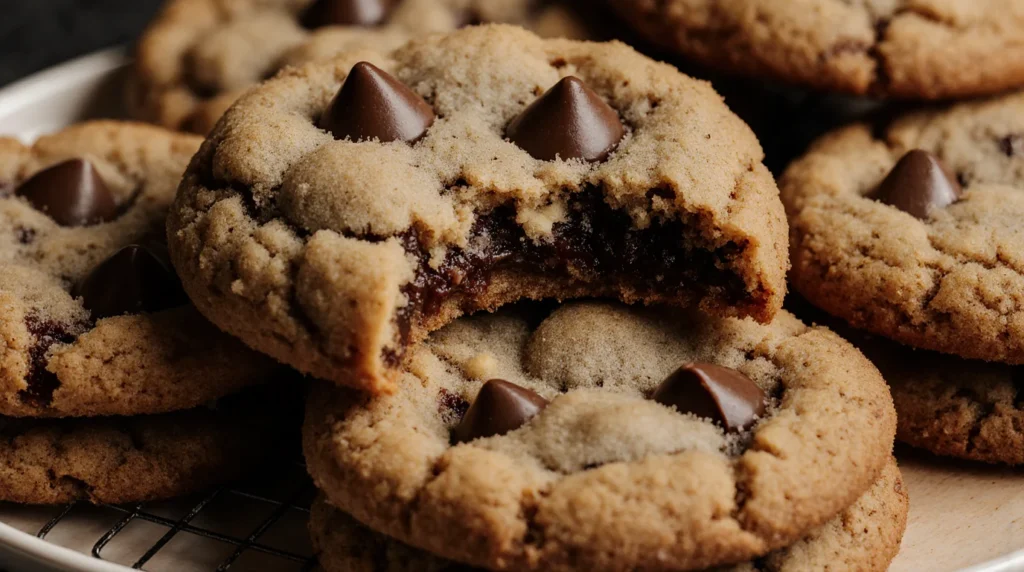
Best Chewy Chocolate Chip Cookie Recipe
Short Description
Discover how to make irresistibly soft and chewy chocolate chip cookies with a slightly crisp edge. This recipe combines simple, high-quality ingredients and easy techniques to bring bakery-style cookies right to your home oven. Perfect for families, beginners, and cookie lovers of all kinds!
Recipe Details
- Serving Size: About 36 small cookies or 24 large cookies
- Prep Time: 20 minutes (plus chilling time)
- Cook Time: 9-13 minutes depending on cookie size
- Total Time: 30-45 minutes (including chilling)
Ingredients per Serving
- All-purpose flour – slightly less than usual for tenderness
- Brown sugar (light or dark) – adds moisture and caramel notes
- Granulated sugar – for spread and crisp edges
- Unsalted butter, softened or browned – flavor and mouthfeel
- Eggs – for structure and extra chew (one whole egg plus an extra yolk preferred)
- Baking soda – for gentle lift and browning
- Salt – to balance sweetness and enhance flavor
- Vanilla extract – to boost flavor depth
- Chocolate chips or chopped chocolate – quality brands like Ghirardelli or Guittard
Nutritional Facts
- Calories: Approximately 150-180 per cookie (varies by size and mix-ins)
- Protein: About 2-3 grams
- Carbohydrates: Roughly 20-25 grams
- Fats: Around 8-10 grams
- Fiber: Close to 1 gram
- Sodium: Approximately 100-150 mg
- Sugar: About 14-18 grams
Instructions
Step 1: Prepare Ingredients
Start by softening unsalted butter or browning it for a richer flavor. Measure out the flour, brown sugar, granulated sugar, baking soda, and salt into separate bowls. Crack eggs and have vanilla extract ready. Chop your chocolate or prepare chocolate chips. Preheat your oven to 350°F to 375°F.
Step 2: Mix for Maximum Chewiness
Cream the butter and both sugars together until light and slightly airy, aiming for a chewy-but-not-fluffy texture. Add the eggs one at a time, mixing just until incorporated. Include an extra egg yolk for more chew if desired. Gently fold in the dry ingredients until just combined to keep the dough tender.
Step 3: Add Chocolate and Mix-Ins
Stir in chopped chocolate or chocolate chips carefully to avoid overworking the dough. If using nuts or other mix-ins, add them now using the same gentle technique.
Step 4: Shape and Chill the Dough
Use a 2-tablespoon or 3-tablespoon scoop to portion the dough. Roll into tight balls to help the cookies keep their height. Chill the dough on a tray for at least 30 minutes, or overnight for deeper flavor and firmer texture.
Step 5: Bake the Cookies
Space scoops at least 2 inches apart on a baking sheet lined with parchment paper or silicone mats. Bake medium-sized cookies for 9–11 minutes, larger cookies for 11–13 minutes. Remove slightly before fully set to keep centers soft and moist. Let cookies rest on the baking sheet for 2–3 minutes before transferring to a cooling rack.
Step 6: Enjoy and Store
Serve warm or store cooled cookies in an airtight container with a slice of bread to maintain softness. Freeze dough portions for quick baking later or freeze baked cookies layered with parchment paper for freshness. Reheat cookies briefly in the microwave or oven to restore that fresh-from-the-oven texture.