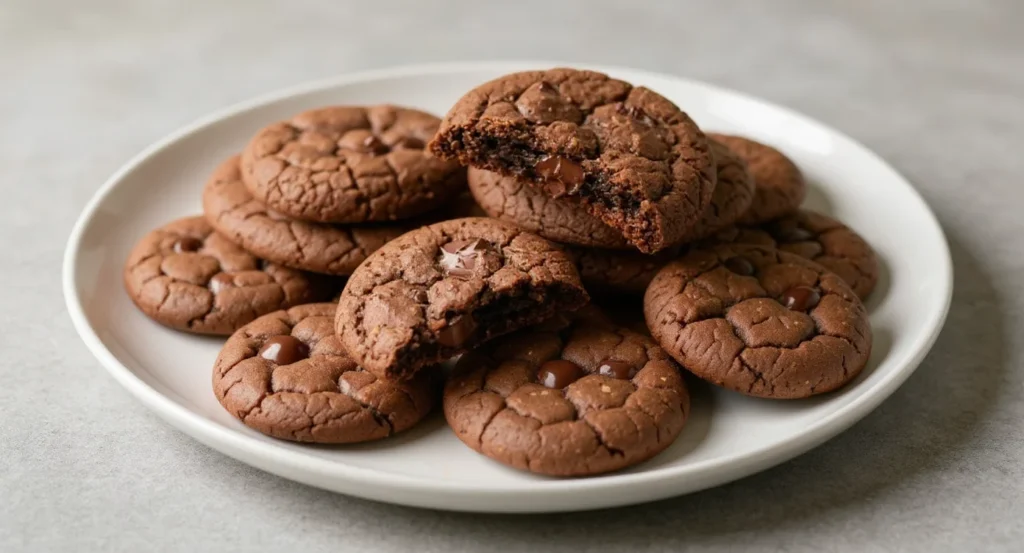
Do you remember the first time warm cookies filled your kitchen? Everyone paused, fork mid-air, for that first bite. The soft center and the melt of two chocolates felt like a celebration. We want to bring that joy to your home, easily and deliciously!
This guide is for all home cooks. We promise a double chunk chocolate cookie that’s chewy and chocolatey. The ingredients are simple, and the steps are easy to follow. You’ll get great cookies every time.
Why try this double chunk chocolate cookie recipe? It has two types of chocolate for depth. We provide clear instructions and tips for success. Families, busy bakers, and cookie lovers will find it fun and easy. We’ll cover ingredients, tools, steps, variations, storage, and troubleshooting. Let’s bake something delicious together!
Key Takeaways
- Bakery-style double chunk cookies are chewy, soft, and intensely chocolatey.
- Two types of chocolate create depth and richer flavor.
- Simple ingredients and clear steps make this double chunk chocolate cookie recipe approachable for all cooks.
- We include tools, tips, and troubleshooting so results are repeatable.
- Family-friendly and easy to customize with add-ins or swaps.
Double Chunk Chocolate Cookie Recipe
We’re excited to share a bakery-style double chunk chocolate cookie recipe. It combines large chocolate chunks with smaller chips for a mix of textures. This makes every cookie interesting and delicious.
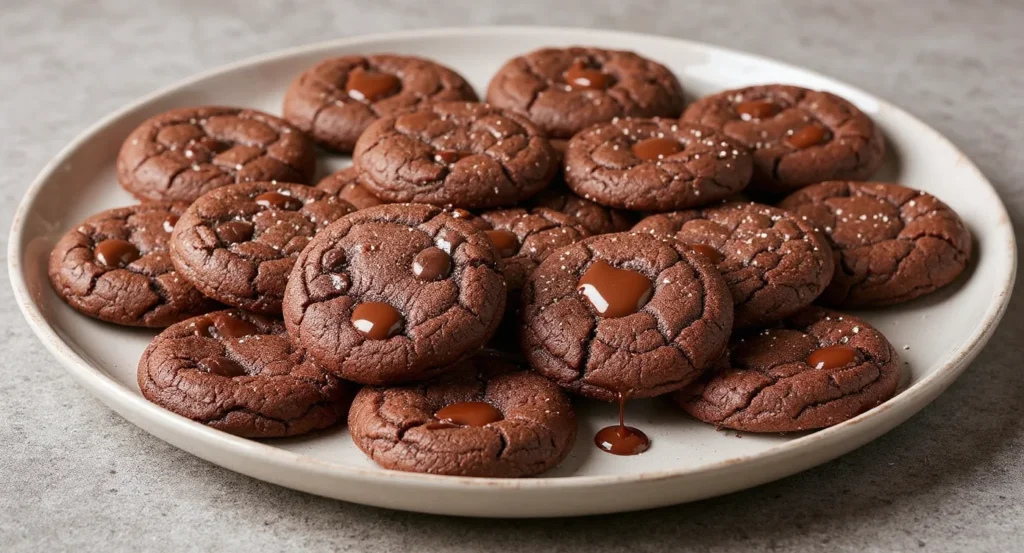
Why this double chunk chocolate cookie recipe stands out from other chocolate chip cookies
Our double chunk concept uses two chocolate sizes. Big chunks for gooey pockets and chips for steady chocolate distribution. This creates pockets of molten chocolate next to smaller, familiar hits in each bite.
We use more brown sugar for chewiness and add cocoa powder for a deeper chocolate flavor. Slightly underbaking the centers keeps the middle soft while edges caramelize. Chilling the dough firms the fat, controls spread, and improves flavor through time.
We borrow bakery techniques like consistent portioning with a scoop and treating the oven with a convection mindset for even heat. This yields uniform, bakery-style rounds every batch.
Flavor profile and texture expectations: chewy, soft, and chocolate-forward
Expect rich bittersweet hits up front and melty semi-sweet or dark pools as you bite. The brown-sugar caramel notes make the crumb tender and slightly sticky, while the outer rim gets a thin, crisp edge.
The mouthfeel blends a soft, buttery interior with warm chocolate perfume on the nose. A light sprinkle of flaky sea salt brightens the chocolate and balances sweetness.
Who will love this double chunk chocolate cookie recipe: bakers, families, and cookie lovers
- Novice bakers who want an easy, forgiving dessert to build confidence.
- Experienced bakers aiming to recreate bakery texture at home.
- Families who enjoy a hands-on bake that tastes like a treat from a local bakery.
- Anyone hunting for a chocolate-forward cookie with mix-and-match versatility.
We keep the method flexible so you can swap chocolate types, chill times, or portion sizes without losing the signature chew and deep cocoa flavor. Let’s bake cookies that feel like a warm hug from the oven!
If you’re interested in trying other baking favorites, you might love our easy chocolate mug cake recipe that’s perfect for quick cravings and just as indulgent.
Ingredients for bakery-style double chunk chocolate cookie
Starting with the right ingredients is key to making great double chunk chocolate cookies. We’ve listed the must-haves, explained why they’re important, and suggested alternatives. This way, you can make the dough your own, whether you’re watching your diet or just want to try something new. Let’s make sure your next batch of cookies turns out just right!
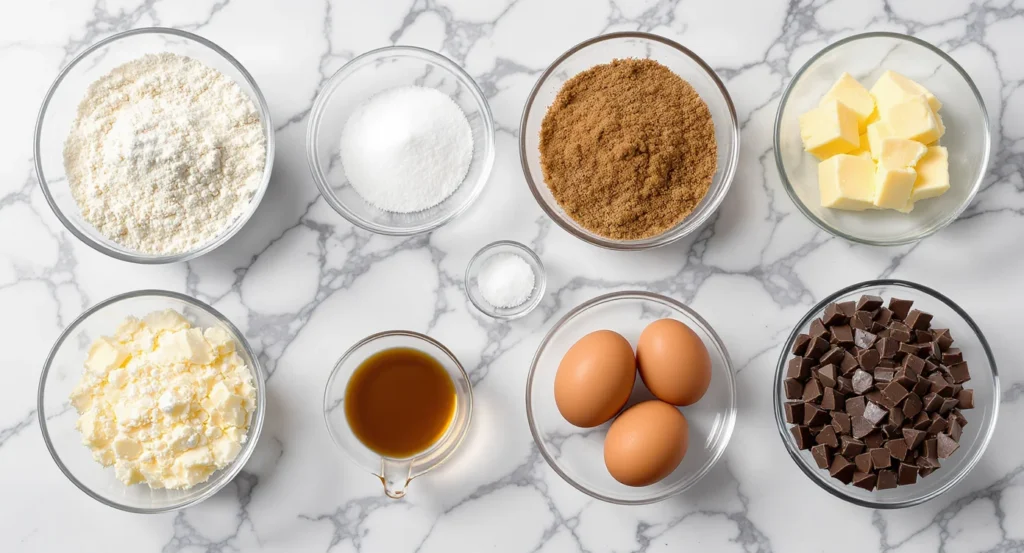
Essential dry ingredients
- All-purpose flour — 2 1/4 cups. It gives the cookies structure; use a knife to level the cup for accuracy.
- Unsweetened cocoa powder — 1/4 to 1/3 cup. It adds a rich chocolate flavor; Dutch-processed cocoa gives a deeper taste.
- Baking soda — 1 teaspoon. It helps the cookies rise and get a nice brown color.
- Fine sea salt or kosher salt — 1 teaspoon. It balances the sweetness; a sprinkle on top before baking enhances the chocolate.
- Optional cornstarch — 1 to 2 teaspoons. It keeps the cookies soft and fluffy.
Key wet ingredients
- Unsalted butter (softened) — 1 cup (2 sticks). Creaming the butter and sugars makes the cookies thicker and chewier; melted butter makes them spread more.
- Granulated sugar — 1/2 cup, and packed brown sugar — 1 cup. Brown sugar makes the cookies moist and chewy; adjust the mix for softness.
- Large eggs — 2. Eggs help bind and add moisture; add an extra yolk for extra chewiness.
- Pure vanilla extract — 2 teaspoons. Real vanilla enhances the chocolate; scraping a vanilla bean adds extra aroma.
Choosing the best chocolate chunks and chips for double flavor
- Use a mix of chopped chocolate bars (60–70% dark) and semi-sweet chips. The bars melt into glossy pockets while chips hold shape.
- Brands we trust: Ghirardelli and Guittard for quality chunks, Hershey’s or Nestlé Toll House for widely available chips.
- Chop irregularly. Larger, uneven pieces create melty pockets and texture contrast that make each bite interesting.
Optional add-ins and substitutions for dietary needs
- Nuts: toasted walnuts or pecans add crunch and flavor.
- Dried fruit: chopped dried cherries pair beautifully with dark chocolate.
- Gluten-free option: use a 1:1 gluten-free flour blend; expect slightly different crumb and spread.
- Lower-sugar swaps: coconut sugar or erythritol blends can work; reduce other liquids slightly and test a small batch first.
- Vegan swaps: stick-style plant butter and a flax egg or commercial replacer; texture will vary, so chill the dough longer.
- Dairy-free chocolate works for lactose-free diets; choose quality dark chocolate labeled dairy-free. For other delicious chocolate treats, be sure to check out this irresistible pistachio croissant recipe that pairs nutty richness with chocolatey goodness.
Pantry tips
- Check freshness: baking soda and cocoa lose potency over time.
- Use room-temperature eggs for even mixing.
- Decide whether to chill or use softened butter depending on your desired spread and chew.
Tools and equipment needed for perfect homemade cookies
We love gear that makes baking easier and more consistent. The right tools cut down mistakes, speed up steps, and help you get bakery-style results at home. Below are the essentials we reach for every time we bake double chunk chocolate cookies.
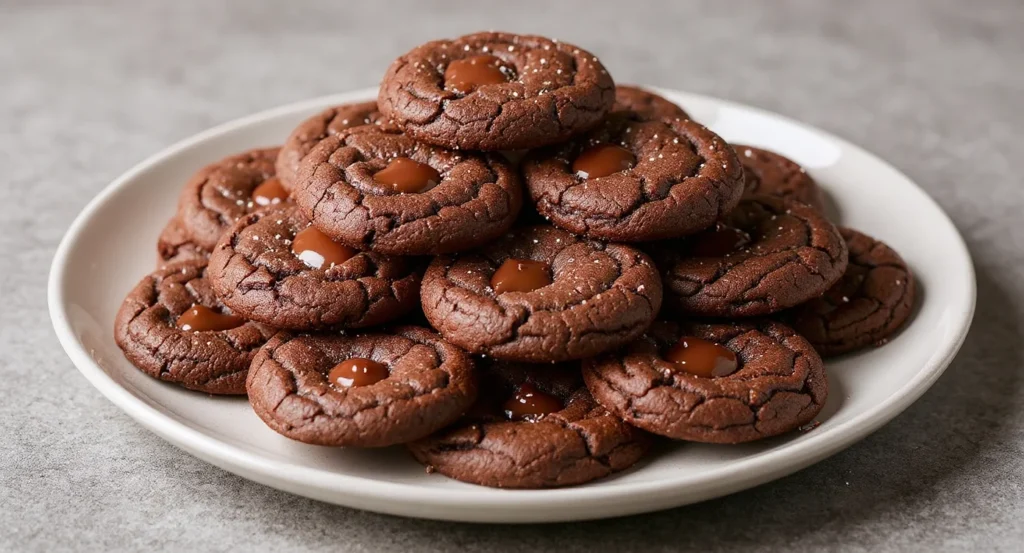
Must-have kitchen tools: mixing bowls, mixer, measuring tools
- Mixing bowls — one large and one medium, glass or stainless steel work best for even mixing.
- Stand mixer with a paddle attachment or a hand mixer for creaming butter and sugar. Use a sturdy wooden spoon if you don’t have a mixer.
- Measuring cups and spoons that are accurate. We recommend a kitchen scale for precise flour measurement to avoid dry cookies.
- Rubber spatula, whisk, and dough scraper for folding chocolate chunks and scraping the bowl clean.
For tools enthusiasts, you might also enjoy our detailed guide on how to use a Ninja Creami for homemade ice cream bars—perfect for complementing your fresh-baked cookies.
Baking sheets, parchment, and cooling racks for best results
- Heavy-duty rimmed baking sheets for even heat distribution and to prevent warping.
- Parchment paper or a silicone mat like Silpat to stop sticking and give a uniform bottom crust.
- Cooling racks so cookies set without soggy undersides.
- Oven thermometer to verify your oven reads the true temperature before baking.
Optional gadgets to make cookies more consistent
- 1.5–2 tablespoon cookie scoop for uniform rounds and even bake times.
- Digital scale for batch accuracy when scaling recipes.
- Dough chill containers or shallow pans to cool dough quickly and evenly.
- Bench scraper for clean portioning if you prefer dividing by weight.
- Pastry brush for applying an egg wash or melted butter when a recipe calls for a glossy finish.
Quick tips: preheat the oven fully and rotate baking sheets halfway through the bake for even color. If you lack one gadget, adapt with common household tools and the cookies will still turn out great. We always clean and care for nonstick mats and metal sheets to extend their life and keep results consistent. Happy baking!
Step-by-step instructions for how to make double chunk chocolate cookie
We guide you through each step to make your cookies perfect every time. Follow each instruction, prepare your ingredients and tools, and let’s bake with confidence!
- Soften unsalted butter to room temperature. Beat with 1/2 cup granulated and 1 cup packed brown sugar until light and aerated, about 2–4 minutes with a stand mixer or hand mixer.
- Add eggs one at a time, mixing after each until blended. Stir in 2 teaspoons vanilla extract.
- In a separate bowl, whisk 2 1/4 cups all-purpose flour, 1/3 cup unsweetened cocoa powder, 1 teaspoon baking soda, and 1 teaspoon salt.
- On low speed, add dry mix to wet in two additions or fold by hand. Stop when the dough just comes together to keep cookies tender.
Incorporating double chocolate chunks
- Chop 4 ounces of dark or semisweet chocolate into irregular chunks. Combine with 1 cup chocolate chips for contrast.
- Fold chocolate into the dough in two additions using a spatula. Leave a few larger chunks aside for topping.
- Mix only until streaks disappear. Overmixing develops gluten and makes cookies tough.
Portioning and shaping for uniform cookies
- Use a 2-tablespoon cookie scoop or a digital scale to portion about 30–45 g per cookie for large rounds.
- Roll scoops into tidy balls. For bakery-style domes, slightly overfill the scoop and press dough upward to add height.
- Press reserved large chocolate chunks onto the tops for an attractive finish. Chill scooped dough 30 minutes to overnight for better shape and deeper flavor.
Baking times and temperature tips
- Preheat oven to 350°F (177°C). Position racks in the middle for even heat.
- Bake 9–12 minutes depending on cookie size and oven. Edges should be set and light golden while centers remain soft.
- For chewier cookies aim for about 9 minutes. For firmer cookies add 1–2 minutes.
- Let cookies rest on the baking sheet 5 minutes after removing from oven, then transfer to a cooling rack. This gentle finish keeps centers soft.
- For convection ovens lower temp by 15–25°F. At high altitude, reduce flour slightly and watch bake time.
Tips for getting soft, chewy, and bakery-style results
We aim for cookies with a soft center and a crunchy edge. Making small tweaks can greatly improve your results. Follow these tips to achieve bakery-quality double chunk cookies every time!
Chilling the dough and why it matters for texture and flavor
Chilling the dough makes the butter firm. This slows down the spread, resulting in thicker cookies. You’ll get perfectly crisp edges with a center that remains soft and tender.
Chill for 30 minutes for quick baking. For the best flavor, chill for 24–48 hours. Overnight chilling enhances the chocolate taste and caramelization.
Adjusting bake time, oven temperature, and rack position
Use an oven thermometer to ensure your oven is at the right temperature. Small errors can lead to burnt bottoms or uneven baking.
Bake on the middle rack for even color. Rotate the sheets halfway through. Lower racks can cause the bottoms to brown too quickly.
Underbake slightly for chewy centers. Cookies continue to cook after they’re removed from the oven. If they spread too much, chill the dough balls or lower the oven temperature by 10–15°F.
Storage and reheating tips to retain softness
Keep your baked cookies fresh by storing them in an airtight container at room temperature for up to four days. Adding a slice of bread or apple can help keep them soft.
For longer storage, freeze cookies in a single layer on a sheet before bagging and keeping them for up to three months. Thaw at room temperature before serving.
Freeze raw dough balls on a tray, then transfer to freezer bags for up to three months. Bake from frozen, adding 1–2 minutes to the bake time.
To Warm cookies in a 300°F oven for 3–5 minutes, or microwave for 8–10 seconds to create a gooey center.
- Moisture balance tip: Avoid overbaking and use the right sugar ratio. Add an extra egg yolk or a tablespoon of Karo corn syrup for extra chew if needed.
- Consistency tip: Portion dough with a scoop for uniform size and bake times.
Variations and flavor twists on the classic chocolate cookie recipe
We love trying small changes that make a big difference in flavor. Below are some reliable twists that keep the cookie base the same but offer new tastes. Try one change at a time to see how it affects texture and taste.
Sea salt and espresso boosts
- Sprinkle flaky Maldon sea salt right after baking to lift chocolate notes and add a bright sweet-salty contrast.
- Add 1–2 teaspoons of espresso powder to the dry mix to intensify the chocolate without making the cookies taste like coffee.
Nutty and fruit additions
- Toast walnuts or pecans briefly in a dry skillet to deepen their flavor before folding them into the dough.
- Fold in dried cherries or cranberries for a tart, chewy counterpoint. If you add a large fruit volume, reduce some chocolate chunks so cookies stay balanced.
- For a different profile, replace half the dark chips with white chocolate for a creamy contrast.
Alternative sweeteners and flour swaps
- Use coconut sugar or maple sugar, keeping in mind color and moisture will change. Add one extra tablespoon of brown sugar or an extra egg yolk if you want more chew.
- For gluten-free baking, swap a 1:1 gluten-free flour blend that contains xanthan gum. Expect a slightly different crumb and chill the dough a bit longer.
- For lower-calorie options, test erythritol baking blends in small batches. Textural differences are common, so trial and error helps.
- To make the double chunk chocolate cookie recipe vegan, choose vegan stick margarine, dairy-free chocolate, and use a flax or aquafaba egg substitute. Chill the dough longer so it firms up for portioning.
Presentation ideas for gifting and parties
- Sandwich cookies with vanilla ice cream for an easy, crowd-pleasing treat.
- Dip half the cookie in melted chocolate and let it set for a polished look when giving as gifts.
Nutritional considerations and calorie estimates for double chunk cookies
We want you to enjoy every bite and know what goes into each cookie. Below, you’ll find calorie ranges, factors that change nutrition, and tips for trimming calories. We also have advice on labeling cookies when you share or sell them.
Typical calorie range and what shifts the numbers
- Standard large cookie (about 45–60 g) usually lands between 220–350 calories.
- Larger size, extra chocolate chunks, more butter, or added nuts push calories higher.
- Dark chocolate with high cocoa can raise calories while boosting flavor intensity.
Factors that change nutrition per cookie
- Cookie weight and portioning method.
- Type and amount of chocolate: chips versus big chunks.
- Inclusions like walnuts or pecans add healthy fats and calories.
- Ingredient swaps, such as low-calorie sweeteners, change sugar calories and texture.
Factors that change nutrition per cookie are important to understand for caloric awareness. Visit the Mayo Clinic’s guide on nutrition labels and calorie counting for useful tips on managing calorie intake.
Practical ways to reduce calories or adjust serving size
- Make smaller cookies using 1-tablespoon scoops to control portions.
- Use a higher ratio of chips to chunks or cut total chocolate by 10–20%.
- Replace part of the butter with unsweetened applesauce or plain Greek yogurt for moisture; expect slight texture shifts.
- Choose dark chocolate with higher cocoa so you need less for the same flavor punch.
Labeling tips when sharing or selling homemade cookies
- Labeling tips when sharing or selling homemade cookies help keep consumers informed and safe. The FDA’s comprehensive guidance on food labeling requirements is essential reading for home bakers.
- Calculate nutrition with ingredient weights and a trusted calculator such as FDA FoodData.
- List allergens clearly: milk, eggs, wheat, and any nuts used.
- State serving size and a clear calories-per-serving example, for example one cookie = 250 kcal.
- Include storage directions and a best-by date to keep customers informed.
Troubleshooting common double chunk chocolate cookie problems
We all love perfect batches of cookies, but sometimes things don’t go as planned. Here are quick fixes to get your double chunk chocolate cookies right again. Try each solution, then bake a small batch to see if it works.
Cookies spreading too thin or staying flat: causes and fixes
Thin cookies? Check the butter’s temperature. It should be soft, not melted. If it’s too warm, chill the dough for 30–60 minutes or refrigerate it before baking.
- Flour and sugar balance: Use a scale for accurate flour measurements. If cookies are too sweet or light, reduce sugar by a tablespoon or two.
- Baking surface and chilling: Bake on a cooled sheet with parchment or a silicone mat. Avoid warm pans to prevent extra spread.
- Leavening check: Mix a pinch of baking soda or powder with hot water. Fizz means it’s good. Replace old agents.
Dry, crumbly cookies versus underbaked centers: balancing moisture
Dry cookies often mean overbaking or too much flour. Shorten baking time by 1–2 minutes and cut flour by one to two tablespoons per cup if dough is stiff.
- Extra tenderness: Add one egg yolk or a teaspoon of cornstarch to the dough for a softer crumb.
- Underbaked centers: If centers look raw, your oven might be cool or cookies too big. Try baking at a higher temperature or for a bit longer.
- Visual test: Centers should look set but slightly glossy. A toothpick from the center should come out with moist crumbs, not batter.
Uneven baking, burnt edges, or pale cookies: oven and technique checks
Uneven baking can be due to hot spots or rack position. Use an oven thermometer to check temperatures and rotate pans halfway through baking.
- Burnt edges: Move the rack up one position or lower the oven temperature by 10–15°F. Lighter-colored baking sheets reflect heat and reduce edge browning.
- Pale cookies: Ensure the oven is fully preheated. Too much moisture in the dough can prevent browning. Avoid overcrowding pans to let air circulate.
- Mixing and freshness: Check for flour pockets and mix until just combined. Make sure baking soda and baking powder are fresh for even lift.
Conclusion
This double chunk chocolate cookie recipe makes cookies that are soft and full of chocolate. They are easy to make at home. Follow the tips for creaming, choosing chunks, and baking for the best results.
If your cookies spread or bake unevenly, check the troubleshooting section. It has solutions for common problems.
Save this double chunk chocolate cookie recipe and try chilling the dough overnight for a richer taste. You can also add espresso or sea salt for different flavors. Share your baking on Instagram or Facebook and tag your friends.
Make test batches to understand your oven better. Store cookies in an airtight container or freeze dough for later. When sharing, remember to note calories and allergens.
Let’s bake together and make cookie time fun and creative!
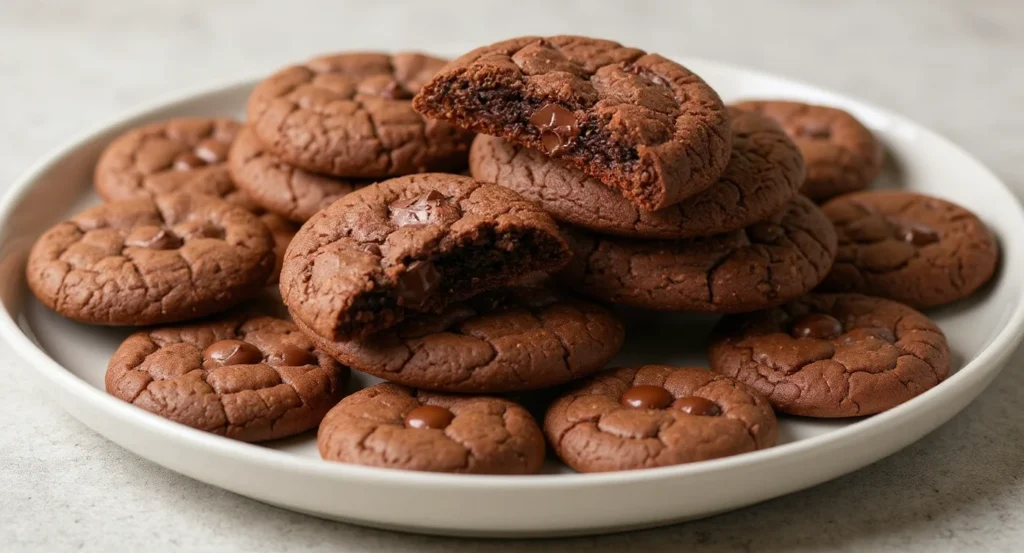
Double Chunk Chocolate Cookie Recipe
Short Description
These double chunk chocolate cookies are soft, chewy, and loaded with both chocolate chunks and chips for an irresistibly rich flavor. Perfect for any occasion, this recipe keeps the classic chocolate cookie base while allowing for creative flavor twists and easy storage tips.
Recipe Details
- Serving Size: 1 cookie
- Prep Time: 20 minutes (plus optional chilling)
- Cook Time: 12-14 minutes
- Total Time: 32-34 minutes (including prep and baking)
Ingredients per Serving
- 1 ¼ cups all-purpose flour
- ½ teaspoon baking soda
- ½ teaspoon salt
- ½ cup unsalted butter, softened
- ½ cup brown sugar, packed
- ¼ cup granulated sugar
- 1 large egg + 1 egg yolk
- 1 teaspoon vanilla extract
- ¾ cup dark chocolate chunks
- ¾ cup semi-sweet chocolate chips
Nutritional Facts
- Calories: Approximately 250-300 per cookie
- Protein: 3-4g
- Carbohydrates: 30-35g
- Fats: 13-15g
- Fiber: 2-3g
- Sodium: 150-200mg
- Sugar: 20-25g
Instructions
Step 1
Preheat your oven to 350°F (177°C) and position the racks in the middle for even heat.
Step 2
In a medium bowl, whisk together the flour, baking soda, and salt. This will ensure your cookies rise and have the perfect texture.
Step 3
In a large bowl, cream the softened butter with brown sugar and granulated sugar until light and fluffy. Add the egg, egg yolk, and vanilla extract, mixing until combined.
Step 4
Gradually add the dry ingredients to the wet ingredients, mixing just until blended. Avoid overmixing to keep cookies tender.
Step 5
Fold in both the dark chocolate chunks and semi-sweet chocolate chips evenly throughout the dough.
Step 6
For best results, chill the dough in the refrigerator for at least 30 minutes, or up to 48 hours to enhance flavors and texture.
Step 7
Using a cookie scoop, portion uniform rounds of dough onto a parchment-lined baking sheet, spacing them well apart.
Step 8
Bake for 12-14 minutes, or until edges are golden but centers remain soft and slightly glossy.
Step 9
Allow cookies to cool on the baking sheet for a few minutes before transferring to a wire rack to cool completely.
Step 10
Store cookies in an airtight container at room temperature for up to four days, or freeze for longer storage.